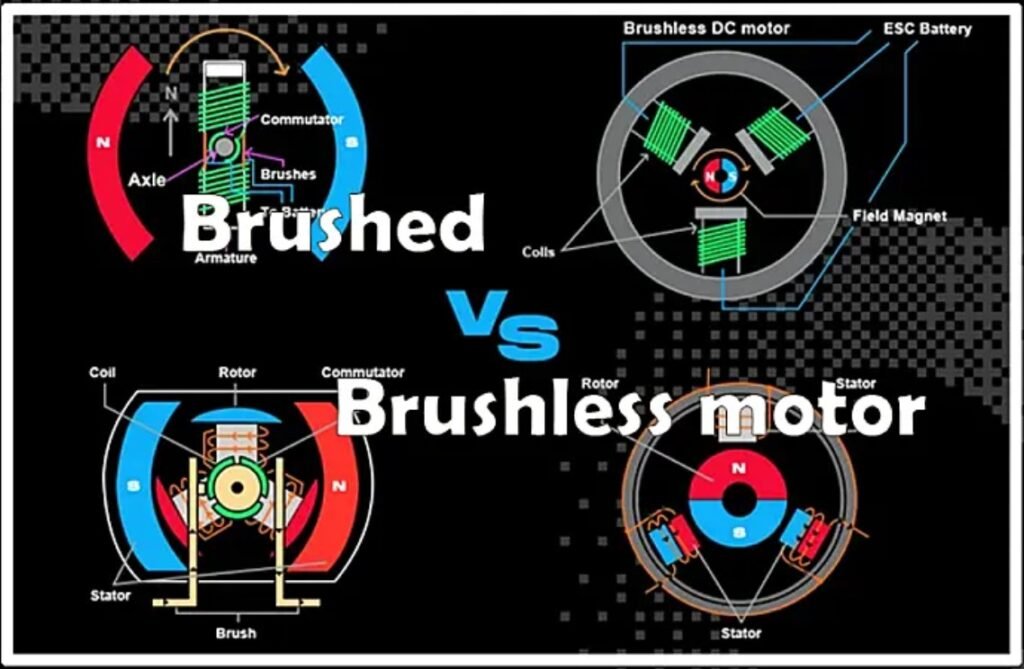
You can boost your product’s performance, efficiency, and reliability by replacing a brushed motor with a brushless one. Brushless motors often achieve 85% to 90% efficiency, while brushed motors reach only 75% to 80%. The table below shows how a brushless upgrade path can extend operating life and battery runtime:
Metric | Brushed Motors | Brushless Motors |
|---|---|---|
Operating Life (hours) | 1,000 – 8,000 | 10,000 – 100,000 |
Efficiency | 75% – 80% | 85% – 90% |
Battery Life | N/A | 30%-50% longer |
INEED offers high-quality brushless gear motors and brushless DC motors for many applications. Most product owners and hobbyists can achieve this upgrade with the right guidance.
Key Takeaways
Upgrading to brushless motors boosts efficiency to 85%-90%, compared to 75%-80% for brushed motors.
Brushless motors last significantly longer, with lifespans of 10,000 to 100,000 hours, reducing maintenance costs.
The upgrade process involves careful preparation, including gathering necessary parts like a brushless motor and electronic speed controller.
Testing your new brushless system is crucial to ensure it operates correctly and meets performance expectations.
INEED offers customizable brushless motors that fit various applications, providing high efficiency and low noise.
Why Choose a Brushless Motor Upgrade?
Key Benefits of Brushless Motors
When you upgrade to brushless motors, you unlock a range of advantages that improve your device’s reliability and efficiency. Many manufacturers and hobbyists choose brushless motors for these reasons:
Greater efficiency: Brushless motors convert more electricity into usable power, which means less energy is wasted.
Quieter operation: You will notice less noise during use because brushless motors do not have brushes that create friction.
Longer lifespan: The design of brushless motors eliminates the main failure point found in brushed motors, so you get more hours of use.
Low maintenance: You spend less time and money on repairs since brushless motors have fewer parts that wear out.
Superior control: Electronic controllers allow you to adjust speed and torque with precision, giving you smoother operation.
Compact size: Brushless motors are smaller and lighter, making them easy to fit into different products.
Wide speed range: You can use brushless motors in many applications because they perform well at different speeds.
Tip: Brushless motors often last between 10,000 and 20,000 hours, while brushed motors may only last 500 to 1,000 hours. This means you get more value and less downtime.
Industry trends show that brushless motors are becoming the top choice in many fields. The table below highlights why more companies and hobbyists are making the switch:
Key Trend | Description |
|---|---|
Market Growth | The brushless DC motor market is growing fast due to new technology. |
Electric Vehicle Adoption | Electric vehicles use brushless motors for their high efficiency and size. |
HVAC Systems Demand | Energy-efficient HVAC systems rely on brushless motors for better performance. |
INEED Brushless Gear Motors Advantages
You can take your upgrade further with INEED brushless gear motors. These motors stand out in the market for several reasons:
High energy efficiency means you save on power costs.
Quiet operation lets you use your product in noise-sensitive environments.
Longer lifespan gives you reliable service for years.
Customization options help you match the motor to your exact needs.
Wide application suitability covers everything from robotics to automotive projects.
Feature | INEED Brushless Gear Motors | Competitors |
|---|---|---|
Energy Efficiency | High | Varies |
Operation Noise | Quiet | Noisy |
Lifespan | Longer due to no brushes | Shorter |
Customization Options | Available | Limited |
Application Suitability | Aerospace, Automotive, etc. | General |
You can trust INEED brushless motors to deliver consistent performance and reliability. Many customers have seen better results and fewer mistakes after upgrading to these motors. If you want to boost your product’s performance and reduce maintenance, brushless motors from INEED offer a smart solution.
The Upgrade Path: From Brushed to Brushless Motor System
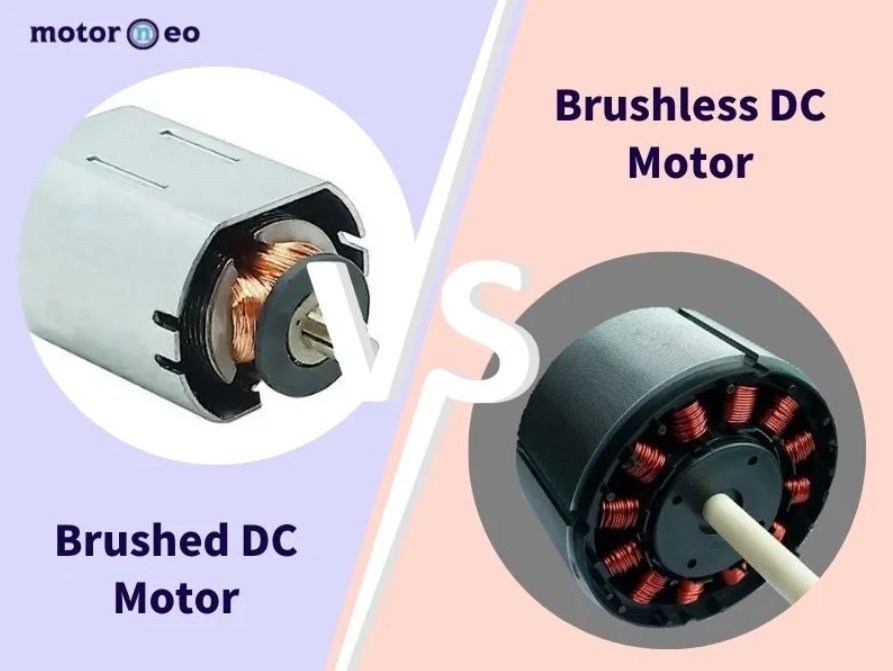
Upgrading your device from a brushed to a brushless motor system can seem challenging, but you can follow a clear upgrade path to achieve better performance and reliability. This section will guide you through each step, from preparation to final testing, so you can enjoy the performance advantage of a modern brushless setup.
Preparing for the Upgrade
Start your upgrade path by gathering all the necessary parts and tools. You will need a compatible brushless motor, an electronic speed controller (ESC), a suitable battery, connectors, and basic hand tools. Check your product’s specifications to ensure the new brushless motor system matches the voltage and current requirements. Review your wiring diagram and label all connections before you begin.
Tip: Upgrading to a brushless motor system may require a high-discharge battery and low-resistance wiring to maximize motor efficiency and prevent overheating.
Make sure you have a clean workspace. Organize your screws, gears, and small parts in containers. This preparation will help you avoid losing important components during the upgrade.
Removing the Brushed Motor
Carefully remove the brushed motor from your device. Begin by disconnecting the battery and any power sources. Use a soldering iron to detach the motor wires, or unplug connectors if your system uses them. Remove the pinion gear from the motor shaft and set it aside for later use. Unscrew the motor from its mount, keeping track of all screws.
Here are some recommended techniques for safe removal:
Heat up your soldering iron to remove motor wires.
Unplug connectors before removing screws and gears.
Pay attention to wiring for easy reconnection.
Store screws and small parts in a safe place.
During removal, you may encounter common challenges. The table below shows typical issues and solutions:
Challenge | Description | Solution |
|---|---|---|
Threading | Fine lines on the commutator surface due to copper transfer from brushes. | Clean the commutator, replace brushes, and ensure proper brush tension. |
Grooving | Smooth, slotted areas on commutators caused by wrong brush grade or impurities. | Examine brush type, replace or clean brushes as necessary. |
Copper Drag | Copper particles dragged to commutator edges, risking short circuits. | Clean commutator of copper flakes and check brush grade. |
Flashover | Short circuit between brushes due to debris buildup. | Clean motor, repair commutator surface, and inspect brushes. |
If you notice any of these issues, clean the affected parts before installing the new motor. This will help prevent future problems and ensure a smooth upgrade path.
Installing the Brushless Motor and ESC
Now you can install the brushless motor and ESC. Follow these steps for a successful upgrade path:
Gather all required components, including the brushless motor, ESC, battery, connectors, and any cooling accessories.
Mount the brushless motor securely in place of the old brushed motor. Make sure the shaft aligns with the gears or drivetrain.
Connect the motor wires to the ESC. Check the orientation to ensure the motor spins in the correct direction.
Attach the ESC’s power input to the battery. Verify that the voltage matches the motor and ESC ratings.
Connect the ESC’s signal cable to your control source, such as a receiver or microcontroller.
Double-check all connections for security and accuracy before powering up.
Add cooling solutions, like fans or heat sinks, if your application requires high-speed operation.
Note: Compatibility is important. Mismatched voltage or excessive current draw can cause overheating and damage. Always match your ESC and battery to your brushless motor system for safe and reliable performance.
If your upgrade path includes performance upgrades, consider using high-performance bearings and precision rotor components. These can further improve speed and efficiency.
Testing the New System
Testing is a key part of the upgrade path. You want to verify that your brushless motor system works correctly and delivers the expected performance advantage. Follow these steps:
Disconnect the motor from the ESC and use a variable-speed drill to spin the motor. Listen for unusual noises or signs of overheating.
Label the motor wires and measure the AC voltage between each pair. This helps you spot wiring issues.
Use a multimeter to check for short circuits between the stator and windings.
Reconnect the motor and ESC. Verify the no-load current matches the manufacturer’s specifications.
Run the system at low speed first. Gradually increase speed while monitoring temperature and response.
Measure key performance benchmarks, such as speed, torque, and efficiency. Compare these to your previous brushed motor setup.
Here are some important metrics to check after your upgrade:
Metric | Description |
|---|---|
Generational Distance (GD) | Measures the average distance from obtained solutions to the nearest points on the true Pareto front. |
Inversion Generational Distance (IGD) | Quantifies the average distance from the points on the true Pareto front to the nearest obtained solutions. |
Spacing Metrics (SP) | Measures the spread of solutions in the Pareto front, ensuring a well-distributed set of solutions. |
Diversity Metrics (DM) | Gauges the diversity of solutions across the Pareto front, critical for balanced optimization. |
Spread Metrics (SD) | Assesses the spread of solutions, ensuring the optimization process explores the entire solution space. |
Tip: If you notice any issues, check your wiring, battery, and ESC settings. Upgrading these components can help you achieve the best results from your brushless motor system.
By following this upgrade path, you can enjoy the benefits of higher motor efficiency, lower maintenance, and improved performance. Your device will run smoother, last longer, and deliver the performance upgrades you expect from a modern brushless setup.
What You Need for a Brushless Motor System
Parts and Tools Checklist
You need the right parts and tools to upgrade your product to a brushless motor system. Start by gathering everything before you begin. Here is a checklist to help you organize your upgrade:
Brushless Motor (BLDC Motor): This motor uses permanent magnets and wound stators to create rotation.
Electronic Speed Controller (ESC): The ESC controls the motor’s speed, torque, and direction.
Microcontroller or Flight Controller: This device sends PWM signals to the ESC for precise motor control.
Matching Motor and ESC: Select a motor with the correct KV rating and an ESC that supports the required voltage and current.
Wiring and Connectors: Connect the motor’s three phase wires to the ESC and wire the ESC’s power supply and signal inputs.
Programming Tools: Program the microcontroller to set motor speed and direction.
Calibration Tools: Calibrate the ESC to set throttle endpoints.
Testing Equipment: Use a multimeter and wear protective gear during initial tests.
Tip: Always test your system at low power first. Check all wiring and connections before running at full speed.
Compatibility with INEED Motors
You must check compatibility when using INEED brushless motors in your product. Matching the right parameters ensures safe and efficient operation. The table below shows key factors to consider:
Parameter | Description |
|---|---|
Voltage | Higher voltage increases speed. Too much voltage can cause overheating. |
Current | More current gives higher torque. Make sure the motor can handle it safely. |
Torque | Shows the motor’s work capacity. Balance torque with speed and current. |
You also need to match the controller to the motor’s peak current ratings. Make sure your controller supports the same driving method as the motor, such as trapezoidal or sinusoidal control. Check if the controller can communicate with feedback systems like Hall Effect sensors or encoders. These systems give real-time data for precise control.
INEED motors offer customization for torque, speed, and voltage. You can adjust dimensions and internal structures to fit your device. Technical documentation helps you select the right features for robotics, medical devices, telecommunications, or pool cleaning equipment.
Note: Customizing your INEED motor ensures optimal performance for your specific application. You can choose accessories and encoders to match your needs.
Brushed vs Brushless: Performance Comparison
Efficiency and Maintenance
When you compare brushed motors and brushless motors, you see a clear difference in efficiency and maintenance. Brushed motors usually operate at 75% efficiency, which means they waste a lot of energy as heat. Brushless motors reach up to 90% efficiency, so you get more power and less waste. This higher efficiency leads to longer battery life and lower electricity costs, especially in battery-powered devices.
You also notice that brushed motors need frequent maintenance. You must inspect brushes and the commutator every 500 to 1000 hours. You often replace brushes, clean the commutator, and check connections. Brushless motors have no brushes, so you only need to check bearings occasionally. This design reduces friction and wear, making brushless motors last much longer.
Here is a quick comparison:
Motor Type | Lifespan (Years) | Continuous Working Hours | Maintenance Needs |
|---|---|---|---|
Brushless Motors | 7 to 10 | 20,000 to 30,000 | Minimal wear, mainly bearing maintenance |
Brushed Motors | 2 to 3 | About 5,000 | Frequent carbon brush replacement needed |
You can expect brushless motors to deliver high performance for up to 10 years, while brushed motors may only last 3 years in continuous use.
Customization and Application Flexibility
Brushless motors give you more options for customization and speed upgrades. You can tailor these motors for different voltages, loads, and rotation speeds. You can choose models with or without sensors, and select the number of poles for your application. Brushed motors have limited flexibility and usually work at fixed speeds.
If you want to upgrade your product for high performance, brushless motors let you adjust speed and torque to match your needs. You find many off-the-shelf options for brushless motors, so you can pick the best fit for your project. Industries like automotive, industrial machinery, medical devices, and consumer electronics rely on brushless motors for their efficiency and quiet operation.
Customization Aspect | Brushless Motors | Brushed Motors |
|---|---|---|
Voltage Compatibility | High design flexibility for various voltages | Limited to specific voltages |
Load Requirements | Can be tailored for different loads | Fixed load capabilities |
Rotation Speeds | Adjustable for various speeds | Generally fixed speeds |
Sensor Usage | Can operate with or without sensors | Typically requires sensors |
Number of Poles | More poles available | Fewer poles |
Off-the-shelf Options | Many options available for standard specs | Limited options |
If you need speed upgrades or want to optimize your device for high performance, brushless motors offer the flexibility and efficiency you need.
You see brushless motors used in racing drones for their speed and stability. They also power electric vehicles, industrial machines, and medical tools because they deliver reliable performance and easy customization.
Upgrading to a brushless motor system gives you better performance, higher efficiency, and greater reliability. You also help the environment and enjoy smart technology integration. See the main advantages below:
Key Advantage | Description |
|---|---|
Efficiency | Brushless motors use less energy and waste less power. |
Integration with Smart Technologies | You can connect to smart devices for easier control and monitoring. |
Sustainability | These motors lower carbon emissions and support eco-friendly practices. |
INEED’s brushless gear motors and brushless DC motors fit many upgrade needs. You can get help with:
Custom motor solutions for your application.
Fast support through the website contact form.
Uploading your design files for a quick quote.
Answers from the support team within eight hours.
Tip: For a smooth upgrade, double-check compatibility and reach out to INEED for technical support or customization.
FAQ
What is the main difference between brushed and brushless motors?
You get higher efficiency and longer lifespan with brushless motors. Brushed motors use physical brushes that wear out over time. Brushless motors use electronic control, which reduces maintenance and noise.
Do I need a special controller for a brushless motor?
Yes, you need an electronic speed controller (ESC) designed for brushless motors. The ESC manages speed, direction, and torque. Always match your ESC to your motor’s voltage and current ratings.
Can I use my existing battery with a brushless motor upgrade?
You can often use your current battery if it meets the voltage and discharge requirements of the new motor and ESC. Check the specifications before upgrading to avoid overheating or reduced performance.
How do I know if my product is compatible with INEED brushless motors?
Check your device’s voltage, current, and space requirements. INEED offers customizable options. You can contact INEED’s support team for help with compatibility and selection.
What maintenance does a brushless motor require?
You only need to check bearings and keep the motor clean. Brushless motors do not have brushes, so you avoid frequent replacements. Regular inspection helps you maintain peak performance.