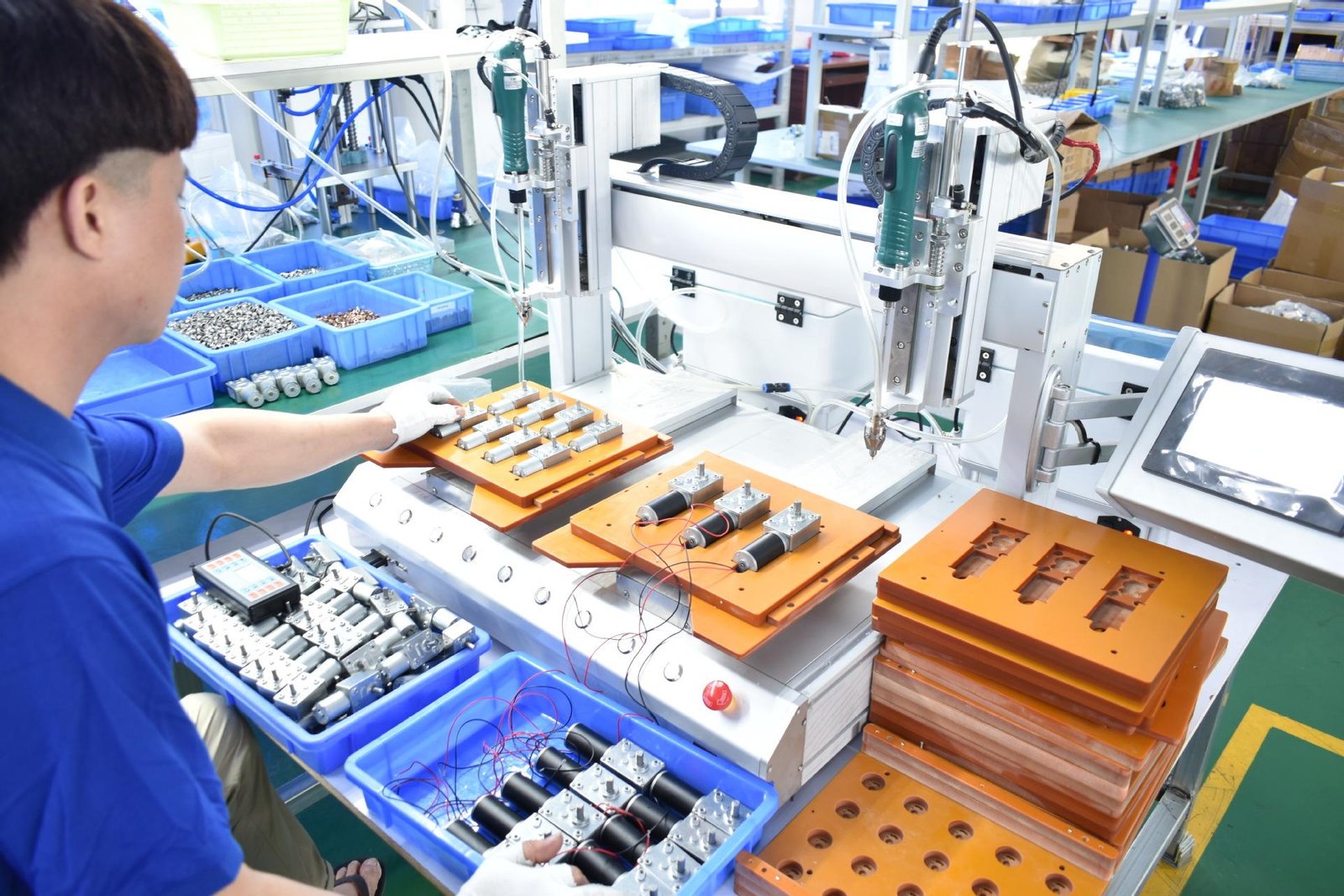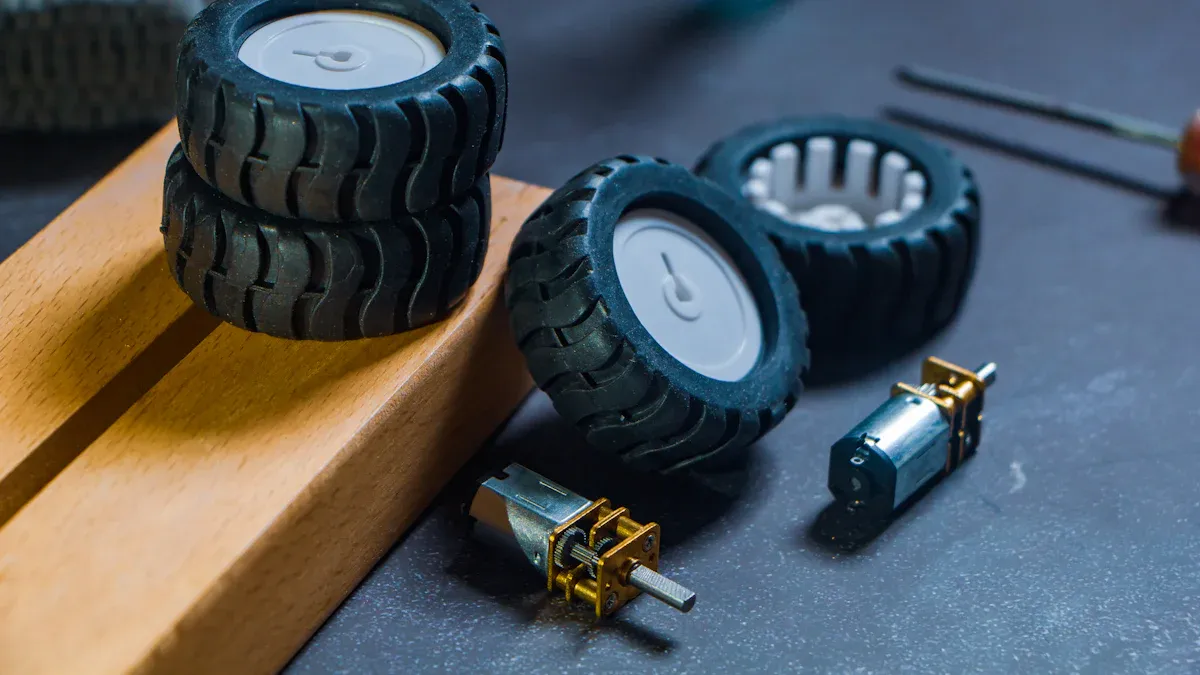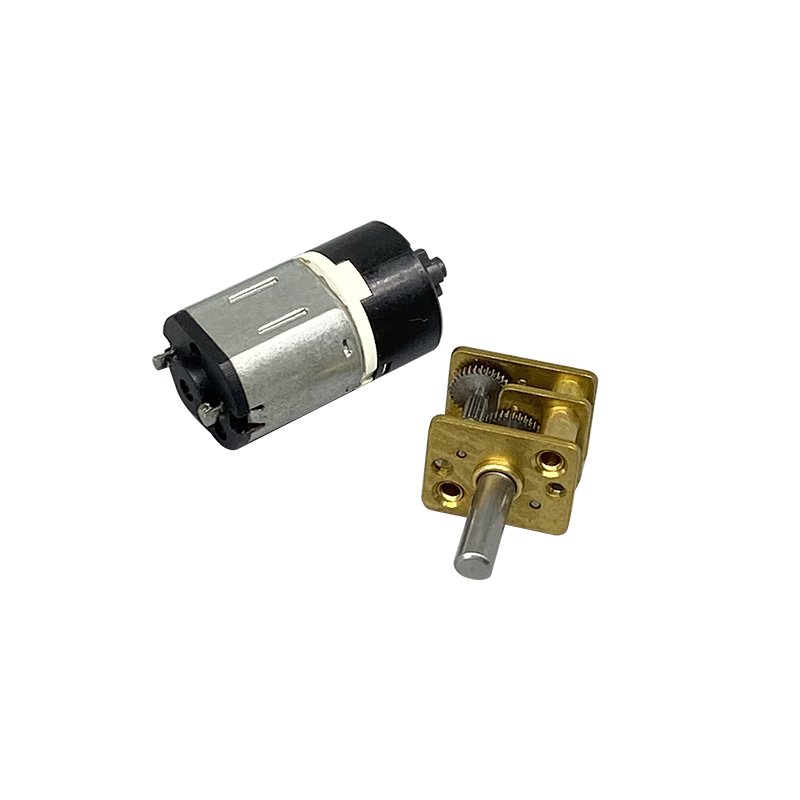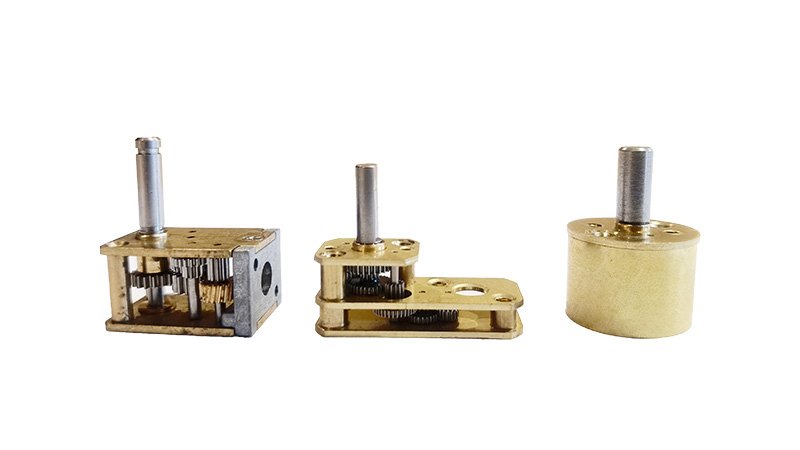
You use dc motor power supplies to provide the energy that drives your motor. The right power supply lets your motor run efficiently, safely, and with the right amount of torque. You need to match your power supply to your motor’s application. INEED specializes in micro and small gear motors, helping you pick the best option for your needs.
Reliable power ensures stable motor performance
Proper matching prevents damage and extends motor life
Key Takeaways
Choose the right power supply to match your DC motor’s voltage and current needs for optimal performance.
Battery packs offer a portable and efficient solution for powering DC motors in various applications.
AC-to-DC converters provide reliable power from wall outlets, ideal for stationary equipment and industrial controls.
Consider using programmable power supplies for advanced control and automation in robotics and testing.
Always prioritize safety features like overload protection and thermal shutdown to protect your motors and equipment.
Power Supply Options for DC Motors
When you choose dc motor power supplies, you need to understand the different power supply options available. Each option offers unique benefits for dc motors, especially when you use INEED small gear motors in your projects. Let’s explore the main types of external power supplies for dc motors and see how they fit various applications.
Battery Packs for DC Motors
Battery packs for dc motors give you a simple and portable solution. You can use rechargeable lithium battery packs or standard alkaline batteries. These packs work well because dc motors are designed to run on direct current. You see battery packs in electric vehicles, portable tools, and consumer electronics. The design becomes easier since you do not need extra conversion electronics. This increases efficiency and reliability.
Tip: INEED small gear motors work perfectly with battery packs for dc motors. You can use them in handheld devices, medical equipment, and robotics.
Here is a table showing typical voltage and current ranges for battery packs in small gear motor applications:
Specification | Value |
|---|---|
Operating Voltage | 1.5 – 100 V |
Common Rated Voltage | 3V, 6V, 12V |
No-load Current | 30-80 mA |
Rated Load Current | 100-220 mA |
Stall Current | Up to 1500 mA |
Rechargeable lithium battery packs offer long life and stable output. You can also use solar panels as power supply for outdoor or remote projects. These options make battery packs for dc motors flexible and easy to integrate.
AC-to-DC Converters
AC adapters and converters change alternating current from the wall outlet into direct current for your dc motors. You use these converters when you need to power devices from the grid. AC-to-DC converters use several technologies:
Half-wave rectification uses one diode to remove the negative part of AC.
Full-wave rectification uses four diodes in a bridge to create a full DC waveform.
Capacitors smooth the DC voltage after rectification, reducing ripple.
Modern ac adapters and converters reach efficiency levels up to 98%. Most operate between 85% and 98%. Some advanced designs keep voltage steady even when the load changes. You can use ac adapters and converters with INEED small gear motors in stationary equipment, security systems, and industrial controls.
Note: AC-to-DC converters are a reliable choice for external power supplies for dc motors in fixed installations.
Linear and Switching Power Supplies
You can choose between linear and switching power supplies for dc motors. Each type has strengths and weaknesses. Linear power supplies use simple circuits to provide clean DC output. Switching power supplies use high-frequency switching to convert power more efficiently.
Here is a table comparing the two:
Power Supply Type | Efficiency Range | Noise Characteristics |
|---|---|---|
Switching Power Supply | 70% – 95% | Relatively large ripple due to pulsed mode |
Linear Power Supply | 30% – 60% | Extremely small output ripple through filtering |
Switching power supplies are popular in dc motor applications. You get cost-effectiveness, smaller size, and higher efficiency. These features support the trend toward miniaturization and portability. INEED small gear motors work well with both types, but switching power supplies are often preferred for compact devices and robotics.
Programmable Power Supplies
Programmable power supplies give you advanced control over dc motors. You can set precise voltage and current levels, automate processes, and simulate real-world conditions. These supplies are essential in research, automation, and testing.
Advantage | Description |
|---|---|
Precision Control | Enables accurate control over voltage and current, essential for optimizing motor performance. |
Flexibility | Allows customization of settings to meet specific requirements, crucial for diverse automation tasks. |
Automation | Supports automated processes, reducing human error and enabling long-term experiments. |
Sequencing | Facilitates complex voltage and current waveforms, simulating real-world conditions for motors. |
Efficiency | Designed for high efficiency, minimizing energy consumption and heat generation in motor applications. |
You see programmable power supplies in advanced robotics and medical devices. Medical device applications use about 6% of these supplies, while industrial production and robotics account for 18%. INEED small gear motors benefit from programmable power supplies in precision tasks, automation, and long-term testing.
Tip: You can use programmable power supplies to optimize the performance of INEED small gear motors in demanding environments.
When you select power supply options for dc motors, consider your application needs. INEED small gear motors are compatible with battery packs for dc motors, ac adapters and converters, linear and switching power supplies, and programmable power supplies. You can find the best match for your project, whether you need portability, efficiency, or advanced control.
How DC Motor Power Supplies Work
Battery Operation
You power dc motors with batteries in many portable devices. The battery sends electrical energy to the motor, which turns it into mechanical motion. The rotor and stator interact to create torque, moving the motor shaft. You find key parts like the commutator and brushes inside the motor. These help control the direction and speed. You adjust the voltage to change speed, and you reverse polarity to change direction.
DC motors convert electrical energy into motion using electromagnetism.
The rotor and stator work together to produce torque.
The commutator and brushes help with dc motor control.
You change speed by adjusting voltage.
You reverse direction by switching polarity.
You need to consider power efficiency when choosing batteries. Lithium batteries give you high energy density and long life. Lead-acid batteries cost less but need regular maintenance. The initial current draw affects battery life, so you must match battery specs to your motor. Power efficiency depends on battery type, voltage, and current draw.
AC-to-DC Conversion
You use AC-to-DC converters to run dc motors from wall outlets. The process involves several steps:
Gather tools like a transformer, rectifier, capacitors, voltage regulator, and multimeter.
Connect the transformer to the AC source to lower voltage.
Attach the rectifier to change AC to pulsating DC.
Add smoothing capacitors to reduce ripple.
Use a voltage regulator for steady DC output.
Wire the output to a DC/DC converter for voltage and current adjustment.
Test the output with a multimeter to confirm specifications.
You achieve high power efficiency with modern converters. You control voltage and current to match your motor’s needs. This method works well for stationary equipment and industrial systems.
Switching and Linear Supply Principles
Switching power supplies use pulse width modulation to regulate voltage. You adjust the on-off ratio of a high-frequency signal based on feedback. This gives you high power efficiency and a compact design. You often use switching supplies in robotics and portable devices.
Linear power supplies step down AC voltage with a transformer. You then rectify and smooth the output to get steady DC. This method filters noise and stabilizes voltage. Linear supplies offer clean output but lower power efficiency compared to switching types.
You select the right supply based on your application. Switching supplies suit compact and energy-efficient designs. Linear supplies work best when you need low noise and stable voltage. Both types support dc motor control and help you achieve the desired performance.
Pros and Cons of Power Supply Options
Battery Packs
Battery packs give you a portable and flexible way to power dc motors. You often use them in handheld devices, robotics, and consumer electronics. INEED small gear motors work well with battery packs, especially when you need compact and lightweight solutions.
Advantages of DC Motors | Disadvantages of DC Motors |
|---|---|
Low electromagnetic interference | Typically more expensive |
Stable for sensitive electronics | Less efficient |
Runs on battery power | Higher chance of failure (brushed) |
Better speed control |
You can also benefit from these features:
Operates on DC power supply without extra controls
Inexpensive speed regulation
Low-cost motor options
Easy pairing with gear reducers
However, battery packs have some drawbacks. You need to monitor battery life and replace or recharge batteries often. Brushed dc motors may fail more quickly due to wear.
AC-to-DC Converters
AC-to-DC converters let you use wall outlets to power dc motors. You see these in stationary equipment, security systems, and industrial controls. INEED small gear motors often use these converters in fixed installations.
Pros:
Reliable and steady power for long-term use
No need to recharge or replace batteries
Supports higher power applications
Cons:
Limits portability since you need a wall outlet
May require extra components for voltage regulation
Improper installation can cause failures like overloads or loose windings
Common failure modes for dc motors with these supplies include:
Overload of motor windings
Loose windings
Dirty commutators
Bad bearings
Degraded winding insulation
Linear and Switching Supplies
You can choose linear or switching power supplies for dc motors, depending on your needs. INEED small gear motors perform well with both, but each type has unique pros and cons.
Linear Power Supplies:
Provide clean, stable voltage with low noise
Simple design and easy maintenance
Can experience voltage droop under heavy load
Larger size and weight may not suit compact devices
Switching Power Supplies:
High efficiency and smaller size
Good for portable and energy-saving applications
Limited peak power capacity, so you may need to oversize them
May not handle regenerative energy from motors well, risking over-voltage
Tip: For robotics and compact devices, switching supplies often give you the best balance of efficiency and size. For sensitive electronics, linear supplies reduce noise.
When you select dc motor power supplies, always match the supply to your application and motor type. INEED small gear motors offer flexibility for all these options, helping you achieve reliable and efficient performance.
Choosing Power Supplies for Motor Types
Brushed DC Motors
You often use brushed dc motors in automation, robotics, and consumer electronics. These motors work well with simple dc motor power supplies. You can connect them directly to a fixed DC source. You do not need extra driver circuits because brushed motors are self-commutated. Permanent magnet dc motors in this category offer reliable performance for many tasks.
When you select a power supply for brushed dc motors, follow these steps:
Identify the voltage range for your application, usually between 1.5V and 48V.
Set the required speed for your system.
Check the torque needed for your load.
Choose a motor size that fits your space and meets your performance needs.
Decide on the duty cycle to match your operational lifespan.
Tip: Permanent magnet dc motors give you stable torque and speed control. You can use battery packs or regulated DC adapters for most applications.
Brushless DC Motors
Brushless dc motors need a different approach. You cannot run these motors directly from a standard DC source. You must use a dedicated driver circuit for commutation and control. The driver uses transistors to manage current direction and speed. This setup allows for precise control and higher efficiency.
Brushless dc motors require a drive circuit for proper operation.
You get better speed regulation and longer lifespan.
Permanent magnet dc motors in brushless designs offer quiet and efficient performance.
You should select a power supply that matches the voltage and current needs of both the motor and the driver circuit. Programmable power supplies work well for advanced automation and robotics.
INEED Small Gear Motor Applications
INEED small gear motors excel in consumer electronics, medical devices, and robotics. You need a stable power supply to handle varying loads. Insufficient current can cause stalling or reduced speed. Efficiency affects how well electrical power turns into mechanical power, impacting torque.
Application Area | Recommended Power Supply | Key Considerations |
|---|---|---|
Consumer Electronics | 5V DC regulated supply | Match voltage/current, include protection |
Robotics | Switching or programmable | Manage starting current, ensure stability |
Medical Devices | Battery or linear supply | Low noise, stable output, overload protection |
Note: Always match the power supply to your motor’s voltage and current requirements. Protection circuits help prevent overcharging and short circuits. Voltage levels must stay within safe limits to avoid overheating or poor performance.
You can rely on INEED’s expertise to customize dc motor power supplies for permanent magnet dc motors and small gear motors. This ensures reliable operation and long-term durability in your projects.
Practical Considerations for DC Motor Power Supplies

Voltage and Current Sizing
You must size voltage and current correctly when you select power supplies for dc motors. If you choose the wrong voltage, your motor may run too slowly or overheat. Current sizing is just as important. Motors need enough current to start and run under load. In robotics, most dc motors operate at 6, 12, or 24 volts. Some motors use as little as 1.5 volts or as much as 100 volts. Current ratings depend on the load and can range from 0.1 amps to several amps. You should always check both continuous and peak current requirements.
Voltage Range (V) | Current Range (A) |
|---|---|
1.5 to 100+ | 0.1 to several |
6, 12, 24 | Stall current varies |
24 to 48 | Continuous and peak current varies |
Tip: INEED offers support to help you match voltage and current to your application. You can request custom solutions for unique motor requirements.
Efficiency and Safety
You improve energy savings when you choose efficient dc motor power supplies. Higher efficiency means less energy wasted as heat. This lowers your operating costs, especially if you use many dc motors. Efficient power supplies also help keep your motors cool and extend their lifespan. Safety features matter too. You should look for supplies with overload protection, short-circuit protection, and thermal shutdown. These features protect your motors and your equipment.
Efficient power supplies reduce wasted energy.
Lower energy use means lower costs.
Safety features prevent damage and accidents.
INEED can help you select supplies with the right efficiency and safety features for your project.
Backup and Protection
You need backup and protection features for critical applications. Fault tolerance ensures your dc motors keep running even if something fails. You can use backup batteries or DC UPS systems for uninterrupted power. Protection features like flyback diodes prevent damage from back EMF. Series diodes block reverse currents. Filters and grounding stabilize your power supply circuit.
Fault tolerance keeps your system running.
Backup batteries and DC UPS systems provide uninterrupted power.
Flyback diodes and series diodes protect against electrical faults.
Filters and grounding reduce oscillations and noise.
Note: INEED offers customization and technical support to help you design reliable backup and protection systems for your dc motors.
Application Scenarios and INEED Solutions
Consumer Electronics and Small Gear Motors
You see small gear motors in many consumer electronics. Their compact design fits perfectly in automated toys, power tools, home automation assistants, and small home appliances. These motors deliver reliable motion and enhance user experience. When you use dc motors in these devices, you get smooth operation and precise control. INEED small gear motors help you achieve high torque in limited spaces. You can rely on them for quiet performance and energy efficiency.
Tip: INEED’s electric screwdriver solution uses dc motors with custom gear ratios and clutch mechanisms. This design improves torque control and prevents thread damage, making assembly tasks easier and safer.
Common Consumer Electronics Applications:
Automated toys
Power tools
Home automation assistants
Small home appliances
Robotics, Medical, and Industrial Uses
You find dc motors in robotics, medical devices, and industrial automation. These applications demand accuracy and dependability. INEED tailors dc motor power supplies to meet global safety and efficiency standards. You benefit from custom voltage regulation, advanced cooling, and intelligent power management. These features keep your motors running smoothly and extend their lifespan.
Application Area | Description |
|---|---|
Robotics | Precise movements and control in robotic systems |
Industrial Automation | Reliable and efficient motion for machinery |
Medical Devices | Accurate and dependable operation for sensitive equipment |
Consumer Electronics | Enhanced performance in toys, tools, and home appliances |
Custom Solutions from INEED
You can request custom solutions from INEED for specialized dc motor applications. INEED offers adjustable gear ratios, customizable shaft configurations, and various mounting options. You can add encoders and gearboxes for precision tasks. These features help you integrate dc motors into your projects with ease.
Customization Feature | Description |
|---|---|
Adjustable Gear Ratios | Control torque and speed for specific needs |
Customizable Shaft Configurations | Choose round, D-shaped, or threaded shafts |
Various Mounting Solutions | Select face-mount or flange-mount designs |
Optional Features | Add encoders and gearboxes for advanced functionality |
Note: INEED supports you with technical advice and fast prototyping. You can upload your design files and receive a quote quickly. This service helps you reduce risks and speed up development.
You need to choose dc motor power supplies that match your motor’s voltage and current needs. Use this checklist to guide your selection:
Check motor size and housing for torque and speed.
Review performance curves for efficiency.
Select voltage and motor based on your application.
Test prototypes to confirm current drain under load.
Avoid these mistakes:
Mismatching voltage and current ratings.
Ignoring load requirements.
INEED offers expert support and custom solutions for small gear motors. Reach out for help with your next project.
FAQ
How do you choose the right power supply for your DC motor?
You check the motor’s voltage and current ratings. You match the supply to these values. You consider your application’s needs for portability, efficiency, and control. You can ask INEED for help with custom solutions.
Can you use battery packs with INEED small gear motors?
Yes, you can use battery packs with INEED small gear motors. These motors work well in portable devices. You get reliable performance and long battery life.
What safety features should you look for in a DC motor power supply?
You look for overload protection, short-circuit protection, and thermal shutdown. These features help prevent damage and keep your motor running safely.
Why do brushless DC motors need a driver circuit?
You need a driver circuit for brushless DC motors because it controls the current flow. This circuit manages speed and direction. You get better efficiency and longer motor life.