Selecting the right motor with encoder for your application makes a big difference in how well your system performs. You must think about load, speed, precision, and the environment before you choose a solution. When you match the motor and encoder to your needs, you gain better efficiency, accuracy, and stability. The table below shows how precise control improves throughput, reduces downtime, and enhances precision. INEED offers a wide range of customized products to help you meet these challenges.
| Outcome Metrics | Description |
|---|---|
| Increased Throughput | Enhanced production rates due to precise control. |
| Reduced Downtime | Minimization of operational interruptions. |
| Enhanced Precision | Improved accuracy in motor applications. |
Key Takeaways
- Understand your application needs before selecting a motor and encoder. Consider load, speed, precision, and environmental factors to ensure optimal performance.
- Choose the right encoder type based on your application. Absolute encoders are best for safety-critical tasks, while incremental encoders suit simpler applications.
- Match motor and encoder specifications carefully. Ensure compatibility in mounting style, signal output, and electrical interface to avoid performance issues.
- Utilize INEED’s customization options to adapt motors and encoders for specific environments. This can enhance reliability in harsh conditions.
- Seek technical support and testing from INEED. Their expertise can help you integrate systems effectively and ensure reliable operation.
Define Application Needs
Choosing the right motor with encoder starts with a clear understanding of your application. You need to consider several critical factors that directly affect performance and reliability. Each application has unique requirements, so you must match the motor and encoder to your application-specific needs for the best results.
Load and Torque
Load and torque are critical factors in every application. You should start by assessing the properties of inertia for both the load and the motor. A low load-to-motor inertia ratio helps you achieve better acceleration and accurate positioning. High rotational inertia can slow down your system and reduce precision. Always check the speed and load ratings to ensure the motor can handle your application. The table below shows important points to consider:
| Factor | Description |
|---|---|
| Output Torque | Motor Output Torque × Gearbox Ratio × Gearbox Efficiency |
| Gearbox Limitations | Exceeding maximum torque can damage the gearbox |
| Gearbox and Motor Matching | Motors with attached gearboxes help avoid compatibility issues |
INEED offers motors with gearboxes already attached, making it easier for you to match torque and speed to your application.
Speed and Acceleration
Speed and acceleration requirements vary by application. For high precision applications, you need motors and encoders that can respond quickly and accurately. Inertia matching is crucial for applications that demand rapid acceleration and deceleration. If your application needs fast response, select a motor with a low inertia and an encoder with high resolution. This combination gives you the control needed for robotics, medical devices, and other demanding uses.
Precision and Environment
Precision application demands go beyond just speed and torque. You must also consider the environment where the motor will operate. Temperature and humidity can affect motor and encoder performance. High temperatures may cause thermal expansion, leading to mechanical failures. Low temperatures can increase starting torque and affect signal quality. Humidity can damage optical surfaces and electronics, especially in harsh or corrosive environments. Industries like medical, semiconductor, and machine tools often require high-resolution encoders and robust designs to withstand these conditions.
Tip: INEED can customize motors and encoders to fit your application, including special coatings, seals, or materials for challenging environments.
By focusing on these critical factors, you ensure your motor and encoder will meet your application’s needs and deliver reliable performance.
Motor Types from INEED

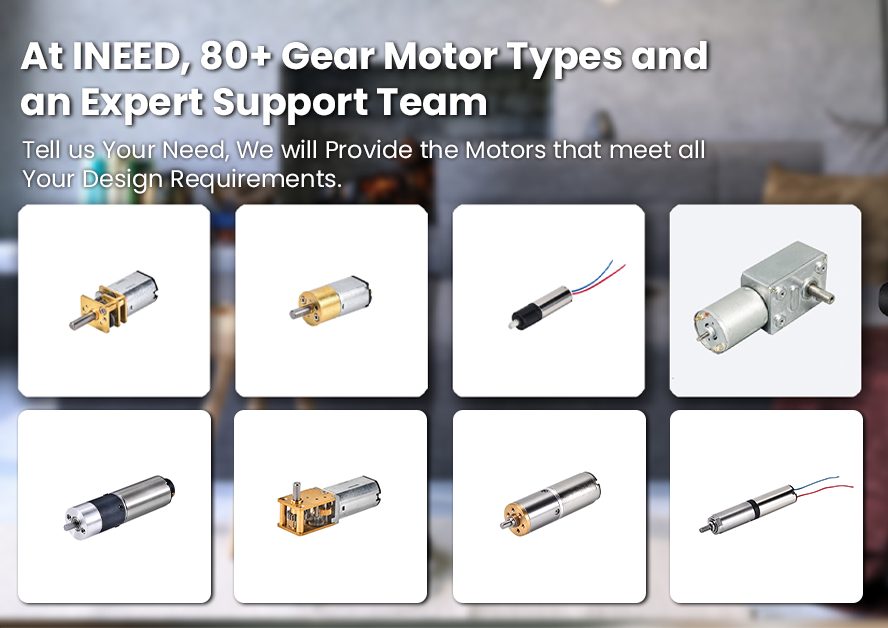
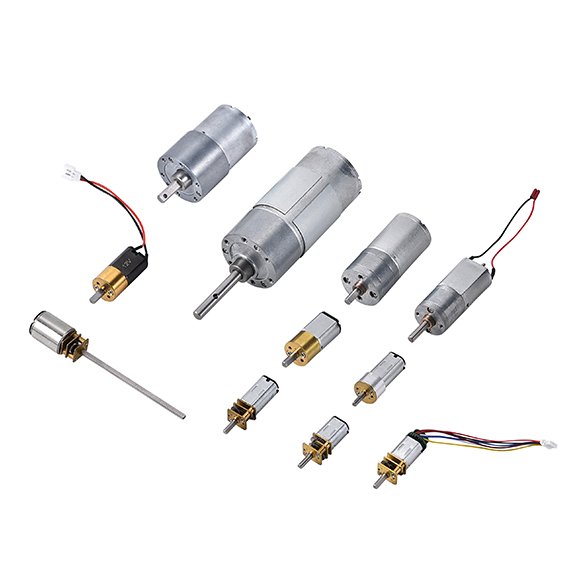
INEED offers a wide range of motor types to help you meet the demands of different projects. Each motor type brings unique features and advantages, making it easier for you to find the right fit for your application. The table below shows how INEED’s variety compares to other brands:
| Motor Type | Features | Customization Options |
|---|---|---|
| Planetary Gear Motors | Wide range of gear ratios and speeds | Material, voltage, encoders, custom designs |
| Worm Gear Motors | Suitable for various applications | Tailored solutions for specific needs |
You can choose from affordable and versatile options for small and medium-sized projects. INEED stands out by offering customization and reliability across many industries.
Brushless Gear Motors
Brushless gear motors give you high efficiency and long service life. You will find these motors in aerospace, manufacturing, and electric vehicles. They work well in demanding environments because they need little maintenance and run quietly. You can also customize them for your specific needs. Here is a quick overview:
| Key Features | Typical Applications |
|---|---|
| High efficiency, reliability | Aerospace, manufacturing, marine, electric vehicles |
| Low maintenance, quiet | Consumer products, outdoor cleaning robots |
| High torque, precise control | Automated guided vehicles, drones |
Small Gear Motor
Small gear motors help you achieve precise control in tight spaces. You can use them in consumer electronics, healthcare, and security devices. These motors deliver high torque and low noise, even in extreme temperatures. They also reduce failures by over 54%, making your system more reliable.
| Performance Metric | Details |
|---|---|
| Peak Efficiency | Over 90% |
| Gear Ratio | Greater than 100:1 |
| Backlash | Very low |
| Operating Temp | Effective in extremes |
| Failure Reduction | Over 54% fewer failures |
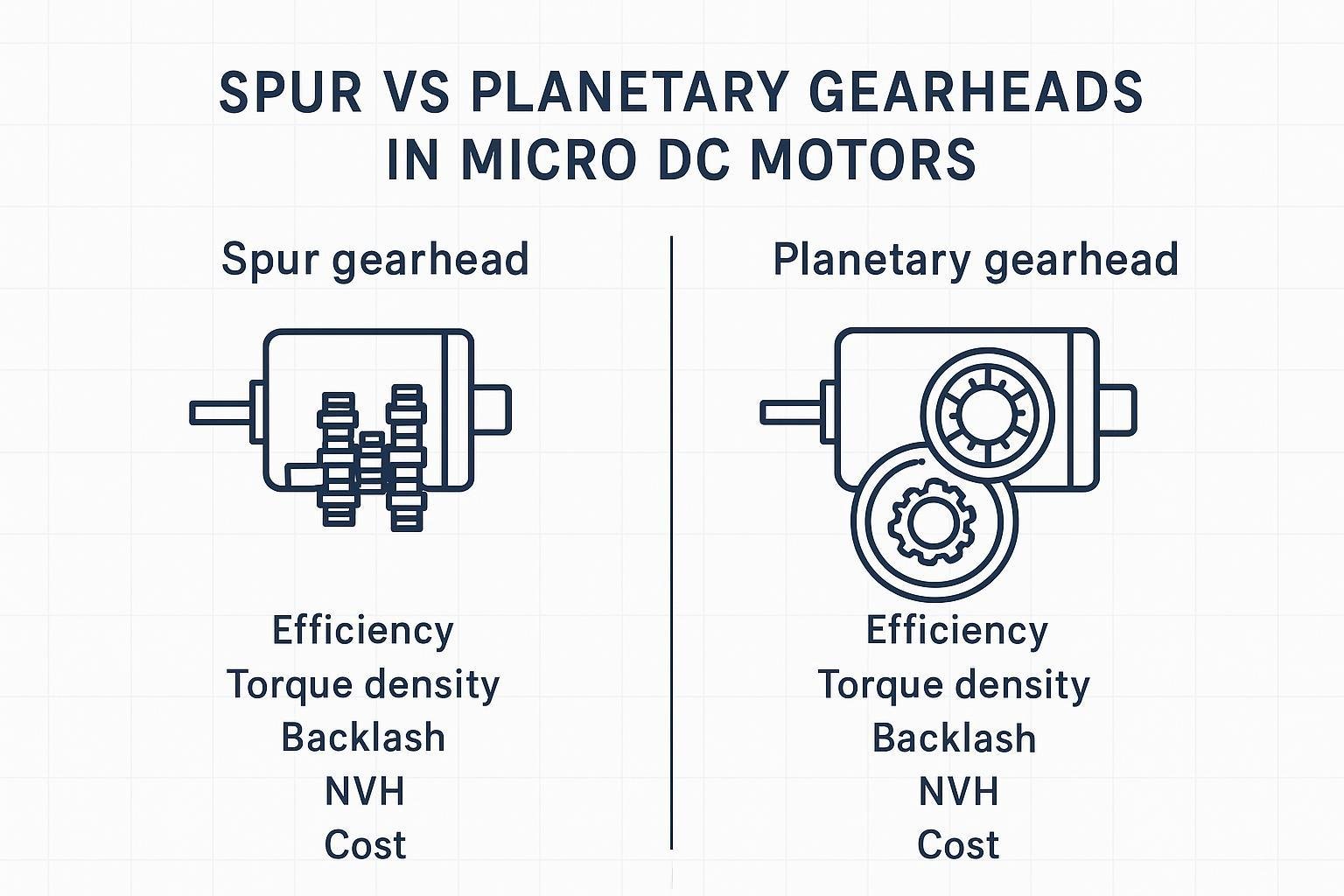
Spur Gear Motors
Spur gear motors give you increased torque and precise speed control. You can rely on them for high-torque applications, such as lifting heavy loads or running automation equipment. These motors deliver steady performance and help you manage heavy tasks with ease.
Spur gear motors provide enhanced efficiency and robust operation, making them ideal for demanding industrial tasks.
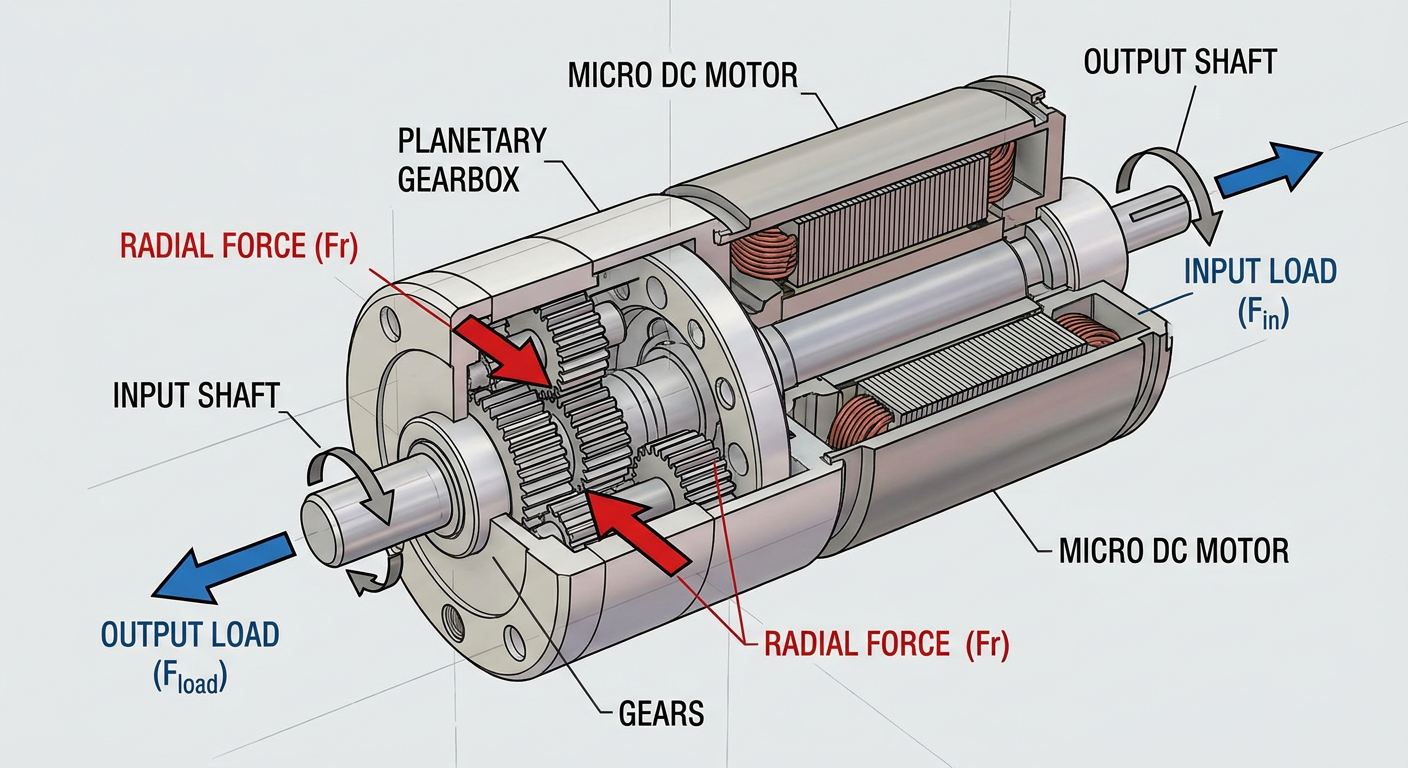
Planetary Gear Motor
Planetary gear motors offer you high precision and compact size. You will see them in automotive systems, robotics, and medical equipment. These motors deliver reliable performance and high torque, even in small spaces.
- Automotive: Power windows and seat adjusters
- Robotics: Robotic arms and automation
- Medical: Compact devices needing high torque
- Factories: Accurate control for machines
- Green Energy: Efficient energy management
You can trust INEED’s planetary gear motors to provide the accuracy and durability your application needs.
Encoder Selection and Integration
Selecting the right encoder is a key step when you want to unlock the full potential of your motor with encoder. You need to understand the different types of encoders and how each one fits your application. By choosing the right encoder, you improve control, feedback, and overall system performance.
Encoder Types: Incremental vs. Absolute
You will find two main types of encoders: incremental encoders and absolute encoders. Each type offers unique benefits and works best in specific situations. When you compare absolute vs. incremental encoders, you see clear differences in how they handle position data and power loss.
| Feature | Absolute Encoder | Incremental Encoder |
|---|---|---|
| Position Information | Provides unique code pattern for exact position | Outputs signal based on rotation count |
| Power Loss Behavior | Retains position information after power loss | Loses position information after power loss |
| Reference Point Requirement | No reference point needed | Requires a reference point for accurate positioning |
| Application Suitability | Suitable for safety-critical applications | Best for simple tasks like speed monitoring |
| Manufacturing Complexity | More complex and expensive to manufacture | Easier and cheaper to manufacture |
- Absolute encoders determine the exact angular position and keep data even when powered off. You do not need a reference point. These encoders work well in safety-critical systems.
- Incremental encoders are easy to manufacture and cost-effective. They can measure speed and direction but lose position data if power is lost. You must set a reference point for accurate positioning.
If you need to invest in the right encoder for a safety-critical or high-precision application, absolute encoders are the best choice. For simple speed monitoring or less critical tasks, incremental encoders offer a reliable and affordable solution.
Tip: INEED provides both incremental encoders and absolute encoders, so you can select the best fit for your project.
Choosing the Right Encoder Resolution
Choosing the right encoder resolution is essential for precise control and feedback. The resolution tells you how many distinct positions the encoder can detect in one revolution. High resolution means the encoder can sense smaller movements, which leads to better feedback and more accurate control.
- The required positioning resolution of your application will guide you in choosing the right encoder.
- A well-tuned system can hold position within one encoder state, also called a quadcount.
- High resolution allows your system to detect deviations faster, improving feedback quality.
- Encoders are common in high-precision servo systems because they provide accurate position and speed feedback.
- Optical encoders can reach very high resolution, making them ideal for nano-positioning and other demanding uses.
Keep in mind that higher resolution does not always mean better accuracy if your system has other errors. More pulses per revolution help with position reporting, but they do not fix mechanical or electrical issues.
When you choose the right encoder, think about your application’s needs. For example, robotics and medical devices often require high resolution for smooth and accurate movement. In contrast, simple conveyor systems may only need a basic incremental encoder.
Note: INEED offers a range of encoder options, including high resolution incremental encoders and absolute encoders, to match your precision and feedback requirements.
Encoder Integration with INEED Motors
Integrating an encoder with your INEED motor ensures you get the best performance and control. You need to follow a few important steps to make sure your motor with encoder works as expected.
| Step | What to Do |
|---|---|
| Choose encoder type | Pick incremental or absolute based on your needs |
| Check compatibility | Match encoder with your control system |
| Mount carefully | Align encoder and motor shafts |
| Protect from environment | Use covers or seals if needed |
| Test feedback | Make sure signals are clear and accurate |
- Always choose the right encoder for your application. Think about whether you need incremental encoders or absolute encoders, and consider single-turn vs. multi-turn encoders if your system requires multiple rotations.
- Check that the encoder matches your control system. INEED motors support a wide range of encoder types, so you can find a compatible solution.
- Mount the encoder carefully. Proper alignment of the encoder and motor shafts prevents errors and ensures reliable feedback.
- Protect the encoder from dust, moisture, and other environmental factors. Use covers or seals if your application operates in harsh conditions.
- Test the feedback signals. Make sure the encoder provides clear and accurate data to your control system.
By following these steps, you ensure your motor with encoder delivers reliable performance and precise control. INEED’s engineering team can help you with choosing the right encoder, integration, and testing, so you get the most out of your system.
Remember: When you invest in the right encoder and follow best practices for integration, you maximize the value and reliability of your INEED motor solutions.
Matching Motor with Encoder Specifications
Compatibility and Sample Calculations
You need to match your motor with encoder carefully to achieve the best performance. Compatibility depends on several factors, including mounting style, signal output, and electrical interface. INEED product specifications make this process easier. You can integrate encoders with different motor types, such as spur gear motors and brushless gear motors. Specifications provide details about mounting styles, which help you align the encoder with the motor shaft. This alignment prevents mechanical issues and ensures accurate readings. Signal output types and electrical interfaces also play a key role in effective control.
When you select a motor with encoder, you must calculate the right specifications for your needs. Use sample calculations to guide your decision. The table below shows common formulas and examples:
| Calculation Type | Formula | Example Calculation |
|---|---|---|
| Max Encoder Resolution | Operating Frequency x 60 / Max RPM | 125kHz x 60 / 1000 RPM = 7,500 PPR |
| Absolute Encoder Resolution (N) | N = 360 / I | N = 360 / 0.01 = 12,000 discrete positions |
| Bit Count for Absolute Encoder | 2^N positions per revolution | 14-bit encoder = 16,384 discrete positions per revolution |
You can use these calculations to determine the right encoder resolution for your application. Higher resolution allows you to detect smaller movements, which improves control and feedback. Always check the maximum RPM and operating frequency to avoid signal loss and maintain performance.
Tip: Matching the encoder resolution to your motor speed and torque helps you optimize performance and reliability.
Integration Tips for INEED Products
You want your motor with encoder to deliver reliable performance. INEED recommends several integration tips to help you achieve this goal:
- Make real-time adjustments during operation. This helps you maintain precise position control, especially in fast-moving or complex tasks.
- Use closed-loop control to reduce positioning errors. Advanced loop shaping techniques, such as the Glover-McFarlane method, improve stability margins and enhance performance.
- Select high-resolution rotary encoders for accurate torque and speed control. Field-oriented control also boosts performance in demanding applications.
- Review mounting styles and electrical interfaces before installation. Proper alignment and connection prevent mechanical and electrical issues.
- Test feedback signals after integration. Clear and accurate signals ensure your control system responds correctly.
You can rely on INEED’s product specifications to guide you through the integration process. These specifications detail mounting styles, signal outputs, and interfaces, making it easier to match your motor with encoder. When you follow these tips, you improve performance and reliability while optimizing performance for your specific needs.
Note: You can contact INEED’s engineering team for support with integration, testing, and optimizing performance. Their expertise helps you achieve the best results for your motor with encoder solution.
Avoiding Common Mistakes
Selecting a motor with encoder can be challenging. You may encounter several pitfalls that affect system performance and reliability. Understanding these mistakes helps you make better choices and avoid costly errors.
Over/Under-Specifying
You might think that choosing the most advanced motor with encoder guarantees success. Over-specifying leads to unnecessary expenses and features you do not need. Under-specifying causes poor performance, increased wear, and frequent failures. The table below shows how each mistake impacts cost and reliability:
| Specification Type | Impact on Cost and Reliability |
|---|---|
| Over-Specification | Leads to unnecessary expenses due to features not required for the application, increasing overall system cost. |
| Under-Specification | Results in inadequate performance, increased wear and tear, and potential failure, leading to higher maintenance costs and downtime. |
You should evaluate your motor control system for long-term efficiency and adaptability. Advanced drives offer better performance and lower maintenance, which improves reliability.
Ignoring Environment
Many users overlook environmental factors when selecting an encoder. Temperature, shock, vibration, and chemical exposure can affect performance. You need to consider these factors to ensure your encoder operates reliably. The table below highlights key environmental considerations:
| Environmental Factor | Description |
|---|---|
| Temperature range | Ensure the encoder operates within the expected minimum and maximum ambient temperatures. |
| Shock and vibration | Consider ruggedized models for encoders in mobile machinery or heavy industry to withstand stress. |
| Ingress protection (IP rating) | Look for at least IP65 or higher for outdoor or washdown environments to resist dust and moisture. |
| Chemical resistance | Use stainless steel housings and sealed enclosures in environments with cleaning agents or corrosive materials. |
| Mounting location | The encoder’s position affects its size, shape, and connector selection. |
INEED offers customization, such as special coatings and seals, to help you address these environmental challenges.
Poor Integration
Poor integration between motors and encoders can cause serious problems. You may experience inaccurate position detection, longer start-up times, and higher control complexity. These issues can lead to speed fluctuations and operational failures, especially at high speeds. Some encoder types are sensitive to harsh environments, which affects reliability.
- Inaccurate position detection leads to cumulative errors.
- Longer start-up times require recalibration after power outages.
- Higher control complexity increases costs.
- Speed fluctuations and failures occur at high speeds.
- Environmental sensitivity reduces reliability.
INEED’s quality control and engineering support help you integrate motors and encoders correctly. You receive guidance on mounting, testing, and protecting your encoder, ensuring stable and accurate operation.
Tip: Always consult with INEED’s technical team to avoid these common mistakes. Their expertise and quality control processes help you achieve reliable results.
Practical Selection and Sourcing Tips
Vendor Selection: Why Choose INEED
Choosing the right vendor for motors with encoders can make your project easier and more successful. You want a partner who understands your needs and delivers reliable solutions. INEED stands out because you get advanced technology, strong support, and proven quality. When you compare vendors, use clear criteria to guide your decision.
| Criteria | Description |
|---|---|
| Technological Compatibility | INEED motors and encoders integrate with many control systems. |
| Regulatory Compliance | INEED meets ISO 9001, REACH, and RoHS standards. |
| Innovation and R&D | INEED invests in new features and custom designs. |
| Total Cost of Ownership | You save on maintenance and upgrades with INEED’s durable products. |
| Scalability | INEED adapts solutions for small prototypes or large production. |
| Vendor Support | You receive fast, expert help from INEED’s technical team. |
You should also look for accuracy, durability, and customization options. INEED offers motors that measure speed and position with high precision. You can request custom designs for special projects. The company’s products withstand harsh environments and scale easily for larger orders.
Tip: Always check for certifications and support when you choose a vendor. INEED provides both, so you can trust your solution.
Technical Support and Testing
Strong technical support helps you solve problems quickly and keeps your system running smoothly. INEED gives you access to engineers who answer questions and help with integration. You can request free samples to test before you commit to a full order. Testing ensures that motors and encoders work as expected in your application.
- You receive guidance on installation and setup.
- INEED offers in-house quality control and performance testing.
- Free samples let you evaluate products in real-world conditions.
- Ongoing support helps you adapt to new requirements or troubleshoot issues.
Testing and support reduce risks and improve reliability. You can rely on INEED’s team to help you at every stage, from design to delivery. This approach saves you time and money, and it helps you achieve better results.
Note: When you choose a vendor with strong support and testing, you gain confidence in your project’s success.
You unlock better results by matching motor and encoder specifications to your application needs. Follow best practices for wiring, signal noise reduction, and grounding:
| Best Practice | Description |
|---|---|
| Follow Wiring Schemes | Use the encoder datasheet for correct connections. |
| Reduce Signal Noise | Shield cables to prevent interference. |
| Proper Grounding | Ground at one end for reliable signals. |
INEED supports you with personalized consultation, advanced manufacturing, and aftermarket assistance. You can access resources to understand load, speed, and compatibility. As automation grows, trends like miniaturization and smart sensors make choosing the right solution even more important. Rely on INEED’s expertise for your next project.
FAQ
What is the difference between a brushed and brushless gear motor?
| Type | Maintenance | Lifespan | Noise Level |
|---|---|---|---|
| Brushed | Higher | Shorter | Louder |
| Brushless | Lower | Longer | Quieter |
You get longer life and less maintenance with brushless gear motors.
How do you choose the right encoder for your application?
Tip: Start by listing your accuracy needs, speed, and environment. You should match encoder type and resolution to your control system. INEED offers both incremental and absolute encoders for different requirements.
Can you customize motors and encoders for special environments?
You can request custom coatings, seals, or materials for harsh conditions. INEED provides tailored solutions for temperature, humidity, and chemical exposure. You get motors and encoders that fit your unique application.
What support does INEED offer during integration and testing?
You receive technical guidance, free samples, and in-house quality control. INEED’s engineers help you with installation, wiring, and feedback testing. You can contact support for fast answers and troubleshooting.
See Also
Selecting The Ideal Planetary Gear Motor For Precision Screwdrivers
Choosing The Perfect Rotating Motor For Industrial Uses
Finding The Best Vibrating Motor For Your Project Needs
Enhancing LRA Motors For Effective Vibrating Object Designs
Selecting The Best Configuration For Battery Powered Electric Motors