You need to understand field failure modes in small planetary gear motors to keep your equipment running smoothly. When you detect faults early, you gain several advantages:
You can schedule maintenance and reduce downtime.
You save money by avoiding emergency repairs.
You improve reliability with regular checks.
Cost Implication | Description |
|---|---|
Lost Revenue | Unplanned downtime costs manufacturers nearly $50 billion each year. |
Supply Chain Troubles | Failures disrupt production and cause financial losses. |
Reputational Damages | Equipment failures can damage your reputation and lead to recalls. |
More Expensive Repairs | Emergency repairs after a failure cost more and may require rush fees. |
INEED’s strict quality control and advanced testing help you prevent these issues and keep your operations efficient.
Key Takeaways
Understanding failure modes in planetary gear motors helps prevent unexpected downtime and costly repairs.
Regular inspections and maintenance can catch faults early, saving money and improving reliability.
Proper lubrication is essential to reduce wear and overheating, extending the lifespan of your gear motors.
Using advanced diagnostic methods, like vibration analysis, enhances fault detection and improves maintenance accuracy.
Customizing gear motors to fit specific applications can enhance performance and reliability.
Field Failure Modes in Planetary Gear Motors
Understanding field failure modes in planetary gear motors helps you prevent unexpected downtime and maintain reliable performance. Each failure mode affects the motor differently, so you need to recognize the signs early.
Gear Tooth Faults
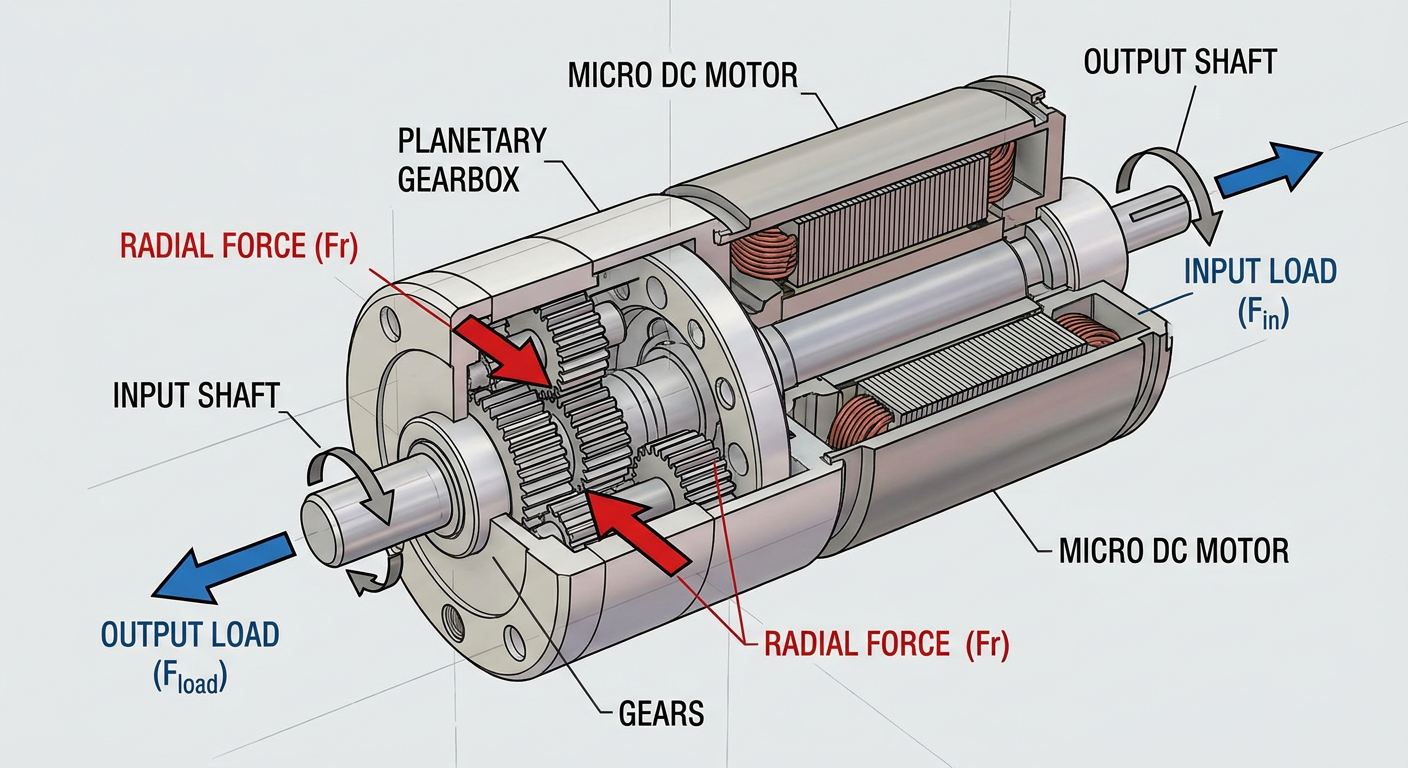
Gear tooth faults are common in planetary gear motors. You may notice issues like micropitting, macropitting, scuffing, or even tooth root bending fatigue. These faults often result from excessive load, poor alignment, or inadequate lubrication. When gear teeth fail, you might hear unusual noise or feel increased vibration. If you ignore these faults, they can lead to more severe damage and reduce the lifespan of your planetary gear motor.
Bearing Faults
Bearing faults can develop due to fatigue, improper installation, or contamination. You might see spalling, brinelling, or cage damage. These faults often trigger secondary gear damage and increase vibration. Factors like excessive thrust loads, misalignment, or poor lubrication can speed up bearing failure. You should pay attention to any changes in vibration or noise, as these are early signs of bearing faults in planetary gear motors.
Lubrication Issues
Lubrication issues are a leading cause of field failure modes in planetary gear motors. When lubrication breaks down, metal parts rub together, causing wear and overheating. This leads to scoring, pitting, and surface fatigue. If you do not address lubrication faults, the motor weakens and becomes more likely to fail. Proper lubrication is essential for reducing friction, controlling temperature, and preventing faults in both gears and bearings.
Shaft Misalignment Faults
Shaft misalignment faults occur when the motor shaft does not line up correctly with the gearbox. This misalignment increases vibration and noise. It causes uneven loading, which leads to premature wear, gear tooth breakage, and bearing failure. You may also notice increased power consumption and seal damage. In severe cases, shaft misalignment can cause catastrophic faults like shaft fracture, especially in compact planetary gear motors.
Electrical Faults
Electrical faults in planetary gear motors include short circuits, winding insulation breakdown, and voltage spikes. These faults can result from broken brushes, overloaded wires, or environmental factors like humidity and dust. Electrical faults often cause degraded or corroded windings, leading to reduced efficiency and possible motor burnout. You should monitor for any signs of electrical faults, such as sudden stops, overheating, or abnormal vibration.
Contamination Faults
Contamination faults happen when dirt, moisture, or foreign particles enter the planetary gear motor. These contaminants degrade internal components and disrupt lubrication. Contamination increases wear, causes corrosion, and leads to faults in both gears and bearings. Keeping vents and seals clean helps prevent these faults and extends the operational lifespan of your planetary gear motor.
Tip: Regular inspection and maintenance help you detect field failure modes early and keep your planetary gear motors running smoothly.
Fault Diagnosis Methods for Planetary Gear Motors
You need to use effective fault diagnosis methods to keep planetary gear motors running reliably. Each method helps you identify faults early, so you can prevent downtime and costly repairs. INEED’s quality control and testing processes make maintenance easier and more accurate.
Visual Inspection Techniques
Visual inspection gives you a quick way to spot faults in planetary gear motors. You should look for signs of wear, cracks, corrosion, or contamination on gears, bearings, and shafts. If you see pitting or scoring on gear teeth, you may have a gear fault. Check for discoloration or deformation on bearings, which can signal bearing faults. Inspect seals and housing for dirt or moisture, as contamination can cause faults. You can use a magnifying glass or a borescope to see small faults that are hard to spot with the naked eye.
Tip: Keep a checklist for visual inspection. Record your findings and compare them with previous data to track fault progression.
Vibration and Noise Analysis
Vibration and noise analysis helps you detect faults before they cause major damage. You can use sensors to measure vibration signals and listen for abnormal noise patterns. Gear tooth faults often create sharp, repetitive vibration signals. Bearing faults produce irregular vibration signals and noise. You should analyze vibration signals using advanced methods to improve fault identification.
Method | Description |
|---|---|
Generalized S-transform | Constructs time-frequency filtering factors for adaptive denoising, suppressing noise on tooth profile crack features. |
HEWT method | Integrates Empirical Wavelet Transform and Hilbert Transform, enhancing sensitivity to early-stage root crack damage in noisy environments. |
Sparse representation method | Utilizes Tunable Q-factor Wavelet Transform for accurate extraction of weak compound fault features in low-speed planetary gear sets. |
Nonlinear dynamics methods | Reveals differences between crack and spalling faults using phase trajectories and fractal dimensions. |
Amplitude and phase modulation features | Distinguishes between localized spalling and crack damage in coherent time synchronous averaging signals. |
New indicators | High sensitivity in time and frequency domains for identifying different crack propagation stages. |
Analytical model | Models time-varying excitation from surface defects in rolling element bearings for generating discriminative fault features. |
You can use these methods to analyze vibration signals and noise, helping you classify faults and improve diagnostic accuracy. INEED’s planetary gear motors support easy sensor integration, making vibration signal analysis more effective.
Torque and Performance Testing
Torque and performance testing let you measure the output of planetary gear motors and spot faults that affect efficiency. You should test the motor under different loads and record the results. If you see a drop in torque or inconsistent performance, you may have gear or bearing faults. Compare your results with manufacturer data to confirm fault characteristics. You can use a dynamometer or a torque sensor for accurate testing. INEED’s motors provide stable performance, so you can easily detect abnormal results.
Note: Always test under controlled conditions. Record all data for future diagnosis and fault classification.
Electrical Testing Methods
Electrical testing methods help you find faults in the motor windings, brushes, and connections. You should measure resistance, insulation, and voltage stability. If you see high resistance or insulation breakdown, you may have an electrical fault. Use a multimeter or insulation tester to check for faults. Stable voltage supply is important for accurate diagnosis. INEED uses premium materials and advanced winding methods to reduce copper losses and core losses, making electrical testing more reliable.
Copper losses affect efficiency. Use high-quality windings to minimize faults.
Core losses can cause heat generation. Laminated core materials help prevent faults.
Voltage stability ensures optimal performance. Monitor voltage during testing.
Advanced Fault Diagnosis Method
Advanced fault diagnosis methods use dynamic models and machine learning to improve fault detection accuracy. You can build a diagnosis model using vibration signals and simulation data. A dynamic-model-based fault diagnosis method combines transfer learning with a simulation model to extract features from vibration signals. This approach helps you identify faults even when labeled data is limited.
A research study shows that a modified lumped-parameter dynamic model simulates vibration signals, and a deep transfer learning network extracts features that are invariant across domains. Experimental results prove that this method reliably identifies fault conditions in planetary gearboxes.
Method | Load (Nm) | Accuracy (%) | Improvement (%) |
|---|---|---|---|
M5 | 0 | 98.7 | N/A |
M12 | 0 | 99.6 | 0.9 |
M5 | 19.6 | 96.1 | N/A |
M12 | 19.6 | 97.8 | 1.7 |
M5 | 49 | 97.8 | N/A |
M12 | 49 | 99.4 | 1.6 |
The BAMDCGAN method increases sample quantity and feature information, improving diagnostic accuracy.
Diagnostic accuracy increased by 37.4% and 57.2% for envelope spectrum-based and time-domain signal-based methods.
The bispectrum-based method achieved optimal training efficiency with a training time of 150.3 minutes.
You can use these advanced methods for fault detection and classification. INEED’s motors are compatible with modern diagnostic tools, making advanced diagnosis easier.
Tip: Use condition monitoring sensors and preventive maintenance schedules to catch faults early and improve reliability.
Common Challenges and Solutions in Field Testing
You may face challenges during field testing of planetary gear motors. Overcome these challenges by following best practices.
Regular inspections help you catch wear patterns early.
Condition monitoring with sensors improves reliability and fault identification.
Preventive maintenance schedules maintain motor efficiency and longevity.
Copper losses and core losses affect efficiency. Use premium materials and better winding methods.
Heat generation can cause insulation aging. Manage cooling and heat properly.
Lubricant selection improves efficiency. Optimize viscosity for best results.
Bearing quality reduces friction losses. Choose high-quality bearings.
Vibration analysis is complex. Use advanced techniques for accurate diagnosis.
You can rely on INEED’s planetary gear motors for easier maintenance and testing. Their design supports accurate diagnosis and long-term reliability.
Callout: Accurate fault diagnosis methods and regular testing help you extend the lifespan of planetary gear motors and reduce downtime.
INEED Solutions for Preventing Planetary Gear Motor Faults
Routine Field Testing Best Practices
You can prevent many planetary gear motor faults by following a routine field testing plan. Start by checking each gear, bearing, and shaft for wear or misalignment. Listen for unusual sounds and watch for vibrations or oil leaks in the planetary gearbox. Schedule oil additions to keep the gear train running smoothly. Clean and replace seals to stop contamination from entering the gearbox. Use vibration checks, oil tests, and thermal imaging to detect early signs of faults. Monitor the temperature of gears and bearings to avoid overheating. Install sensors for real-time analysis of vibrations, heat, and oil condition. Keep detailed records of inspections, oil changes, and repairs. This data helps you spot patterns and predict faults before they cause downtime.
Tip: Regular field testing and data analysis make it easier to catch planetary gearbox faults early.
Preventive Maintenance Strategies
You should use preventive maintenance to reduce the risk of planetary gear train faults. Inspect and replace worn brushes on schedule. Clean the commutator to keep the gear motor efficient. Always follow the manufacturer’s specifications for setup and care. Use the right oil to keep gears smooth and prevent jams in the planetary gearbox. Clean gearboxes often to remove dirt and debris. Monitor motor temperature and load to prevent overheating. Keep maintenance logs to track the condition of each planetary gear train. Preventive maintenance helps you find faults before they become critical. This approach lowers the chance of unscheduled shutdowns and saves money on repairs.
Preventive maintenance identifies potential faults early.
Regular care reduces the risk of planetary gearbox failure.
Scheduled maintenance is more cost-effective than emergency repairs.
Customization and Support from INEED
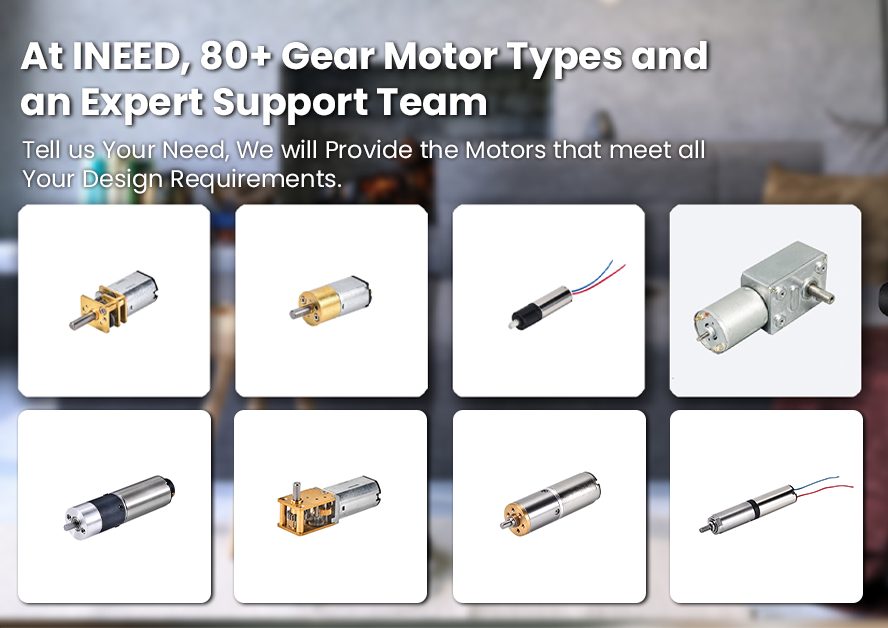
INEED offers customization and technical support to help you address unique planetary gear motor challenges. You can request changes to the shaft, connectors, or wire lengths. INEED provides technical advice to help you select the best connectors for reliability and safety. The team can match couplers to your shaft shape and diameter, preventing slippage in the planetary gearbox. You can customize voltage, speed, torque, and output shaft design for your application. Encoders can be added for position feedback, improving precision in the planetary gear train. INEED supplies samples for testing before you place bulk orders.
Customization Aspect | Description |
|---|---|
Shaft and Connector Mods | Modify connectors, change types, adjust wire lengths, add encoders |
Connector Selection & Design | Technical advice for reliable, safe connections |
Coupler Compatibility | Options and guidance for shaft shape, diameter, and connector style |
Electrical & Mechanical Specs | Customize voltage, speed, torque, output shaft design |
Encoders & Feedback | Add encoders for position feedback |
Sample Testing | Samples for performance verification before bulk orders |
INEED’s planetary gear motors undergo durability tests that simulate real-world conditions. Corrosion-resistant housings protect internal parts from moisture and chemicals. Endurance testing ensures reliable operation in harsh environments. Electrical performance tests confirm that each planetary gearbox meets strict standards for insulation, voltage, current, speed, and torque. Advanced torque and backlash testing guarantee precise motion control and reliable torque delivery.
Callout: INEED’s planetary gear motors set a high standard for durability, reliability, and ease of maintenance, helping you prevent faults and extend the life of your equipment.
You face several critical failure modes in planetary gear motors, including gear wear, bearing faults, misalignment, and lubrication issues. The table below shows common problems and corrective actions:
Issue | Probable Cause | Corrective Action |
|---|---|---|
Excessive Noise/Vibration | Gear wear, Bearing failure, Misalignment, Insufficient lubricant | Replace components, Re-align shafts, Replace lubricant |
Overheating | Overload, Lack of lubrication, High speed | Reduce load, Replace lubricant, Adjust speed |
Output Shaft Won’t Turn | Motor failure, Gearbox failure, Excessive load | Check power, Disconnect load, Adjust gear ratio |
You improve reliability and safety by using regular testing and preventive maintenance. Studies show that condition-based maintenance reduces costs and enhances system performance. INEED’s quality motors and support help you achieve dependable operation.
FAQ
What is the main advantage of using a planetary gear motor?
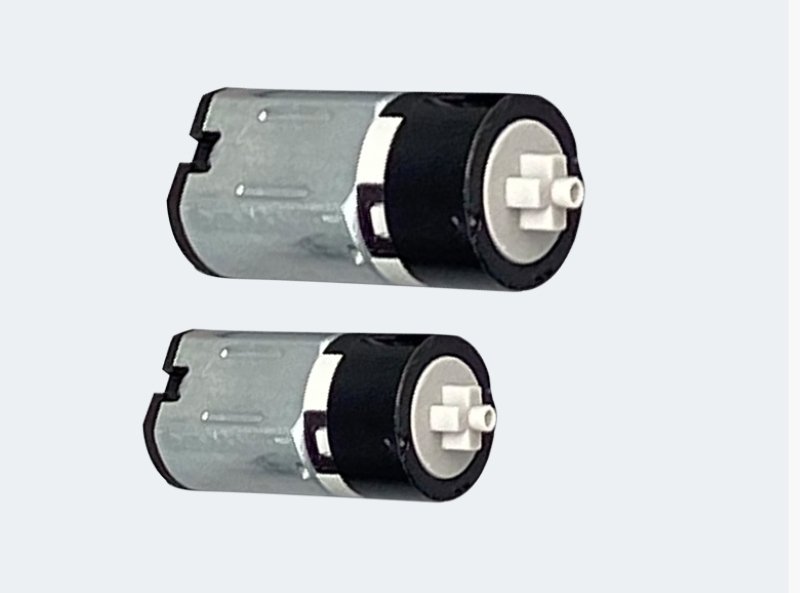
You get high torque in a compact size. The design spreads the load across multiple gears. This makes the motor strong and efficient for many applications.
How often should you inspect a gear motor?
You should inspect your gear motor every three to six months. Regular checks help you find early signs of wear or damage.
What causes unusual noise in a gear motor?
Unusual noise often comes from worn gears, loose parts, or poor lubrication. You should check for these issues right away to prevent further damage.
Can you customize a gear motor for your application?
Yes, you can request custom voltage, speed, shaft design, or connectors. INEED offers many options to fit your needs.
How do you prevent contamination in a planetary gear motor?
You should keep seals clean and replace them if damaged. Always operate your motor in a clean environment to block dirt and moisture.