By the end of this playbook, you’ll hold a signed-off qualification file with four gates passed: process evidence audited, first-article inspection completed against a named standard, pilot capability proven, and production launch documented. If supplier qualification goes wrong, you pay for it on the plant floor, not on the purchase order. In ABB’s survey on unplanned downtime, 83% of respondents put the cost at US$10,000 per hour or more, and 76% said it could reach US$500,000 per hour (ABB, published 14 October 2025). A motor that dies in the field at month nine costs far more than the programme that would have caught it.
That’s why choosing a Chinese micro DC motor manufacturer is an engineering decision, not a purchasing formality. One market-research estimate, with its definition stated, puts the global micro motor market at US$43.17 billion in 2026, growing at 5.0% CAGR to US$70.31 billion by 2036, counting motors from below 1 W to a few kW (FACT.MR, updated 14 March 2026). That boundary is the report’s own choice, so other reports land on very different numbers.
One thing to disclose before the criteria: the publisher of this article is itself a micro DC motor manufacturer. This checklist is written so you can use it against any supplier, including us, and it never replaces your own incoming inspection.
How to Evaluate Chinese Micro DC Motor Manufacturers: The Four Gates
The evaluation runs through four gates, in order: audit the supplier’s process evidence, sample and inspect the first article against a named standard, run the pilot with exit criteria set in advance, and close production launch with documentation and supply-continuity terms. Each gate has one named owner, one document that closes it, and one defined failure path. Skip a gate and the risk doesn’t disappear — it just shows up later on your production line.
That structure isn’t arbitrary. ISO 9001:2015 clause 8.4 asks you to set criteria for evaluating, selecting, monitoring and re-evaluating external providers, keep documented information, and apply controls in proportion to the potential impact (ISO 9001:2015 published text, 2015). A qualification file with four documented gates is how you actually satisfy that clause for a motor supplier, instead of just saying you did.
The sampling standard also changed recently. The current AQL standard, ISO 2859-1:2026, was published on 22 January 2026 as Edition 3, replacing ISO 2859-1:1999 plus its Amendment 1:2011 and Corrigendum 1:2001 (ISO committee record, 22 January 2026). The new edition adds skip-lot sampling and clearer guidance on sampling strategy. Most inspection providers still use tables built on ANSI/ASQ Z1.4-2008, so name the edition your plan follows.
Gate | What is checked | Who signs | Document that closes it | On failure |
|---|---|---|---|---|
1. Process evidence | Traceability, calibration, in-line test records, control plan | Supplier quality engineer | Audit report with findings and closure evidence | Re-audit after corrective action, or disqualify |
2. Sampling and first article | Dimensional, electrical and life characteristics against the controlled specification | Buyer’s quality engineer | First-article inspection report with measured values | Reject lot, re-sample, or rework to specification |
3. Pilot | Capability indices, thermal and load margin, controller compatibility | Buyer’s engineering lead | Pilot report with capability study and exit-criteria sign-off | Containment, corrective action, interim approval only |
4. Launch | Compliance declarations, PPAP-level documentation, continuity terms | Procurement lead and quality manager | Signed qualification file and approved supplier status | Hold the PO until the file closes |
Write the Controlled Specification Before You Contact Anyone
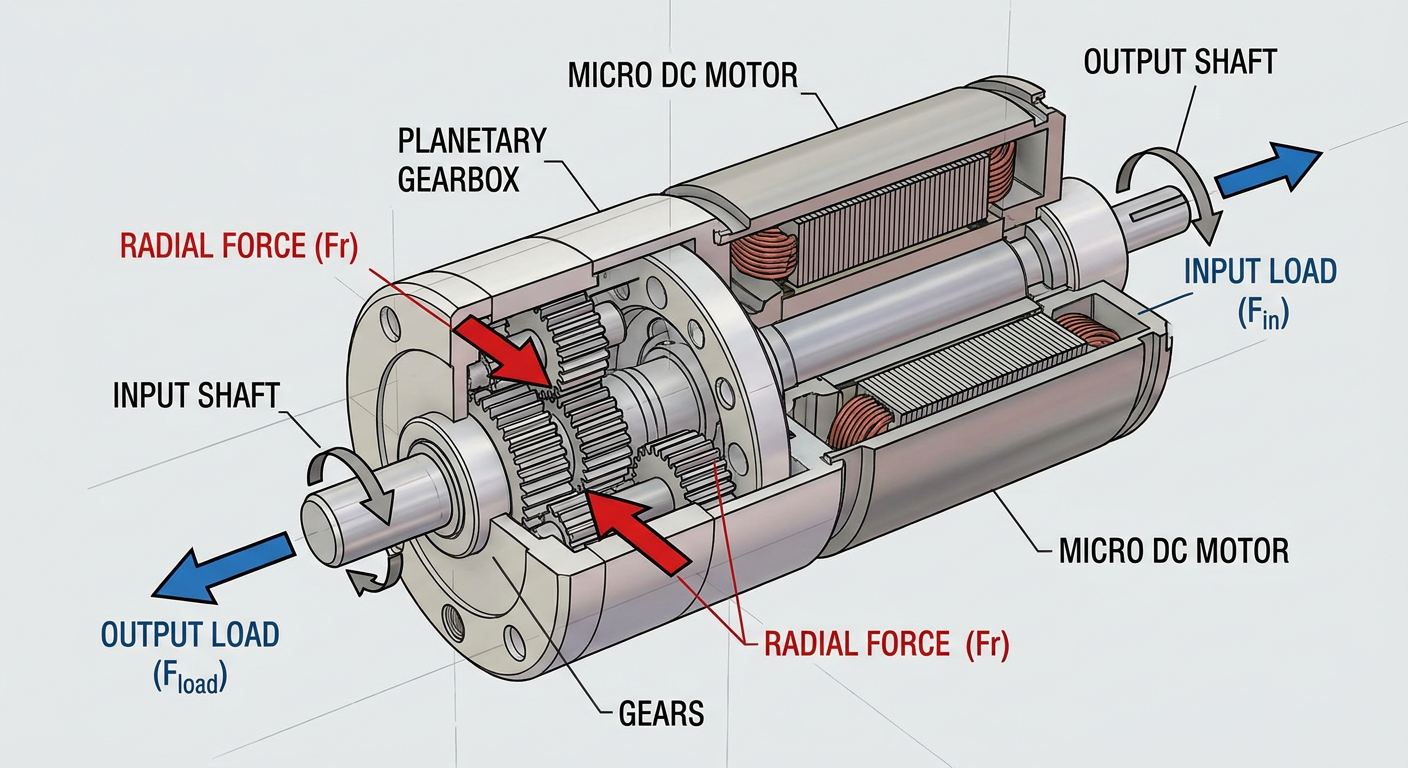
The controlled specification is the document every later gate measures against, so it has to exist before your first supplier conversation. It locks down rated voltage, no-load current, stall torque, duty cycle, ambient range, life-test profile and acceptance limits — plus gearbox ratio, backlash and radial shaft load if a gearmotor is in scope. Without it, first-article inspection has no acceptance condition and the pilot has no exit criteria. The micro DC motor selection trade-offs for OEMs that drive those limits are worth settling now, not after a sample arrives.
Two FAULHABER engineering rules belong in the specification, because they define what “rated” actually means. FAULHABER’s guidance on continuous-operation current says current under load should not exceed one third of stall current, and that running at maximum power or half stall torque should be intermittent only, since stall torque can damage the commutation or windings (FAULHABER DC micromotors technical information, undated). If a supplier quotes a continuous rating at half stall torque, they’re quoting an intermittent duty point.
The same manual notes that measured lifetime depends on torque load, speed, operating mode, ambient conditions and how the motor is integrated, and that guaranteed lifetime figures cannot be given (FAULHABER DC micromotors technical information, undated). That’s why the specification carries an application-profile life test instead of a single MTBF number, and why your incoming inspection criteria have to reference the duty cycle the motor will really see.
Pro Tip: For every standard the supplier claims, record four fields: certificate number, scope, issuing body and expiry date. A certificate whose scope does not name the product family or the manufacturing site is not evidence for the part you are buying.
Stage 1: Audit the Supplier’s Process Evidence, Not Their Claims

A good micro DC motor supplier audit checklist asks for four things: traceability records, calibration certificates for every gauge used on your part, in-line test data, and a control plan that names the reaction when a characteristic drifts. ISO 9001:2015 clause 8.5.2 requires identification and traceability where needed to ensure conformity — for a motor, that means lot-level traceability from rotor winding through final test. So ask to see a completed traceability record for a shipped lot, not the procedure that describes one.
The audit separates a manufacturer from a trading company faster than anything else. Walk the line and confirm the named processes exist: rotor winding, balancing, assembly, commutation check, noise test and on-load test. A supplier who can’t show you the winding station and the calibration sticker on its dynamometer is assembling from bought-in parts, which changes both your quality risk and your recourse.
AQL matters at this gate because it tells you what the supplier’s sampling records can and can’t prove. ISO 2859-1 defines AQL as the maximum average percentage of defective items considered acceptable during random sampling — a process-quality index used to pick a plan, not a promise that a lot contains that percentage of defects. A supplier who presents an AQL pass as a lot guarantee has misread the tool.
Give each function one acceptance item, so the audit closes with three signatures instead of one. The engineer owns dimensional and electrical conformance evidence; the operations manager owns capacity, lead-time and change-notification evidence; the procurement lead owns certificate validity, warranty terms and commercial continuity.
Function | Acceptance item | Evidence to sight |
|---|---|---|
Engineer | In-line test data for the last three lots | Dynamometer records with gauge IDs and calibration dates |
Operations manager | Change-notification process for design, material and process changes | Signed change-notification procedure plus one worked example |
Procurement lead | Certificate register with scope and expiry | Certificates naming the product family and site |
One limit worth stating plainly: the Chinese GB/T motor standards are voluntary unless a contract references them, so a supplier’s claim of compliance means little until you write the standard number and edition into the purchase order.
Stage 2: Sampling and First-Article Inspection with a Named Standard

Plan micro motor sampling and first-article inspection from a worked AQL example for a 4,000-unit lot: at General Inspection Level II the lot gets code letter L, which at AQL 2.5 needs a 200-unit sample with an acceptance number of 10 and a rejection number of 11 (QIMA). Ten or fewer failures pass the lot; eleven reject it. Write those three numbers into the inspection plan before the lot ships.
The AQL value is your call, not a motor-industry default. The values on the standard ladder run 0.065, 0.10, 0.15, 0.25, 0.40, 0.65, 1.0, 1.5, 2.5, 4.0 and 6.5, with inspection levels I, II, III and S1 to S4 available (QIMA, 26 October 2021). By convention, defect classes often use 2.5 for general consumer goods, 1.0 for higher-risk categories, 4.0 where minor cosmetic defects are acceptable, and 0 for critical defects, which are safety or compliance failures (QIMA). No source assigns an AQL value to micro motors as a product class, so set your own by defect class and defend them.
The scope of ISO 2859-1 explains when this method even applies. It covers acceptance-sampling systems for inspection by attributes, indexed by AQL, for lot-by-lot inspection, and it’s meant for a continuing series of lots from one producer using one process (ISO committee record, 22 January 2026). A one-off pilot build is not a continuing series, so the sampling plan belongs to production, not the pilot. And the ISO definition of AQL is narrower than most buyers assume: it’s a process-quality index used to pick the plan, not a promise that a lot may contain exactly that percentage of defects. That’s why lot, unit, defective unit and defect class all have to be defined in writing before sampling starts.
First-article inspection adds what sampling can’t cover: dimensional conformance, no-load current and speed, stall torque, insulation resistance and runout, each measured against the controlled specification. For life, FAULHABER’s guidance on brush life gives a planning range: under typical load, a DC motor runs between 1,000 and 5,000 hours (FAULHABER DC-Motors technical information, undated). Size the life test to the brush technology and the duty cycle, and treat the range as application-dependent rather than a rating.
How we handle this at INEED Motors, the publisher of this guide. Our published inspection process covers material selection, production process monitoring and product testing, and finished products get 100% inspection, which supports the first-article and in-line test evidence this stage asks you to collect. It doesn’t set your AQL values, pick your sample size or accept the lot for you; that call stays with you and your inspection plan, whatever supplier you use.
Stage 3: Run the Pilot and Set Exit Criteria Before It Starts
The pilot gate is where production launch readiness is really earned, and its exit criteria must be written before the first unit runs. The PPAP initial-study capability bands give you the disposition rules: a Ppk above 1.67 meets requirements; between 1.33 and 1.67 the process may be acceptable only with customer agreement and enhanced controls; below 1.33 the supplier must contain, correct and take interim approval only (Quality Engineer, 5 July 2026). Element 11 reports Ppk, not Cpk, because an initial study can’t claim demonstrated stability.
The gap between the two indices isn’t academic. Cpk versus Ppk for PPAP comes down to which standard deviation sits in the denominator: Cpk uses within-subgroup sigma and describes a stable process, while Ppk uses overall sigma and describes what the run actually produced. Because overall sigma is always greater than or equal to within-subgroup sigma, Ppk is always less than or equal to Cpk on the same dataset (Quality Engineer, 12 April 2026). A 1.33 Cpk floor applies to ongoing production monitoring; 1.67 is the common initial-study target, and AIAG sets no single unconditional number, so customer-specific requirements govern (Quality Engineer, 12 April 2026).
The pilot package itself follows AIAG’s Quality Core Tools: APQP, Control Plan, PPAP, FMEA, SPC and MSA, with PPAP defined as the contractual submission for the part coming from your supplier (AIAG, undated). The AIAG PPAP manual (4th edition) exists to make sure suppliers can produce parts with consistent quality during an actual production run at production rates (AIAG, undated). A pilot at reduced line speed doesn’t meet that condition.
A rejected capability study shows how a good number still fails. A reviewer rejected a submitted Cpk of 2.14 because there was no control chart behind the number, the study was labelled Cpk instead of Ppk on a brand-new process, and the measurement system analysis came back at 28% gauge R&R on a characteristic with a 0.050 total tolerance (Quality Engineer, 5 July 2026). The index was inflated by construction, and the gauge ate more than a quarter of the tolerance it claimed to control.
Run the pilot with the gearbox in scope. Measure backlash and stiffness, confirm radial and axial shaft load limits, and log thermal rise under rated load with the actual controller. PWM drive frequency affects motor life, and FAULHABER recommends a minimum of 20 kHz for PWM control (FAULHABER DC-Motors technical information, undated). A motor that passes on a bench supply and overheats on your driver has failed the pilot, not the specification.
Stage 4: Production Launch, Documentation and Supply Continuity
Production launch closes when the qualification file is complete and the compliance declarations name your part number. RoHS is the first document to check: it restricts ten substances — lead, cadmium, mercury, hexavalent chromium, PBB, PBDE, DEHP, BBP, DBP and DIBP — with limits applying per homogeneous material, and the four phthalates were added by Commission Delegated Directive (EU) 2015/863 (European Commission, 2021 page for Directive 2011/65/EU). A declaration that covers the motor assembly but not the lead wires and connectors is incomplete.
REACH adds a second declaration with a moving threshold. The ECHA Candidate List, now 253 entries after the 4 February 2026 addition, triggers Article 33 communication when a substance of very high concern is present above 0.1% by weight in an article, and that threshold applies to the individual article, not the finished assembly (Eurofins, 4 February 2026). Ask for the declaration at component level, because a magnet, a housing and a lead wire are separate articles.
Magnet material is now a supply-continuity question too, not just a performance one. MOFCOM Notice 2025 No. 61, announced 9 October 2025, requires a dual-use export permit for foreign-made items containing Chinese-origin rare earths where those rare earths make up 0.1% or more of the item’s value, and it applies to goods made outside China if they contain permanent magnet materials including those rare earths (CSET translation of MOFCOM Notice 2025 No. 61, 9 October 2025). DC motors commonly use rare-earth magnets such as SmCo and NdFeB (FAULHABER DC-Motors technical information, undated). No source quantifies how much of the micro motor market the control affects, so treat the exposure as a documented risk item rather than a measured one.
Fix the commercial terms in the qualification file, not the RFQ. No manufacturer, association or standards source publishes typical lead times or MOQ ranges for custom micro DC motors, so set the lead time, the minimum order quantity, the change-notification window and the raw-material substitution rule as contractual terms you can enforce.
Document | Owner | Acceptance condition | Gate closed |
|---|---|---|---|
Audit report | Supplier quality engineer | All findings closed with evidence | Stage 1 |
Sampling plan and first-article report | Buyer’s quality engineer | Measured values within specification limits | Stage 2 |
Pilot capability study | Buyer’s engineering lead | Ppk disposition agreed and documented | Stage 3 |
RoHS and REACH declarations | Procurement lead | Part-number-specific, component level | Stage 4 |
Supply-continuity terms | Procurement lead | Lead time, MOQ and change notice in the PO | Stage 4 |
upstream supply chain risk for gearbox suppliers
Common Mistakes That Sink a Micro Motor Qualification
The most common failure is accepting a datasheet life figure as a qualification result. FAULHABER states plainly that guaranteed lifetime figures cannot be given, because lifetime depends on torque load, speed, operating mode, ambient conditions and integration (FAULHABER DC micromotors technical information, undated). A supplier who offers a guaranteed MTBF without an application profile is answering a question you didn’t ask.
Mistake two: treating AQL as a lot guarantee. AQL is a process-quality index used to pick the plan, not a promise about the defect percentage in a specific lot. The buyer must define lot, unit, defective unit and defect class before sampling, with critical defects normally at zero acceptance (QIMA). Buyers who skip those definitions end up arguing about whether a scratched housing is major or minor after the lot has already failed.
Mistake three: submitting the wrong capability index. An initial study reports Ppk, so a supplier who submits Cpk on a first significant run is either claiming stability it hasn’t demonstrated or doesn’t know the difference (Quality Engineer, 5 July 2026). Because Ppk is always less than or equal to Cpk on the same data, the swap flatters the number.
Mistake four: an unqualified gauge. A capability study run through a gauge at 28% R&R on a tight tolerance reports a process spread that’s partly the gauge itself, which is why the measurement system analysis is a prerequisite for the capability study, not a parallel deliverable (Quality Engineer, 5 July 2026). Check that the gauge ID on the study matches the accepted gauge.
Mistake five: a compliance declaration at the wrong level. RoHS limits apply per homogeneous material, not per assembly (European Commission, 2021 page for Directive 2011/65/EU), and REACH Article 33 applies to the individual article (Eurofins, 4 February 2026). An assembly-level declaration can’t be traced to the magnet, the housing or the lead wire.
Mistake six: a pilot run at prototype rates. The AIAG PPAP manual exists to prove consistent quality during an actual production run at production rates (AIAG, undated). A pilot on soft tooling or a slowed line validates the design, not the process.
What Success Looks Like
Success is a qualification file a reviewer who has never met you can approve on its own. It holds the audit report with every finding closed, the sampling plan naming ISO 2859-1:2026 and the AQL values by defect class, the first-article report with measured values against the controlled specification, the pilot capability study with its Ppk disposition, and part-number-specific RoHS and REACH declarations.
The incoming inspection criteria for micro DC motors are the last page of that file, and they should be short enough to run at goods-in. No-load current and speed, stall torque, insulation resistance, runout, and a visual check against the defect-class definitions you wrote. The acceptance limits come from the approved first-article sample, not the datasheet, so a lot whose no-load current spread exceeds the approved sample’s spread is a finding even if every unit sits inside the catalogue tolerance.
Verification is measurable. A lot passes when the sample result meets the acceptance number in the plan, and a process passes when its capability index lands in the tier whose reaction you already agreed. The qualification is complete when the supplier’s change-notification process has been exercised at least once, so you know it works before a material substitution reaches your line.
The file also protects you commercially. ISO 9001:2015 clause 8.4 requires documented information on external provider evaluation and controls in proportion to the potential impact (ISO 9001:2015 published text, 2015). A four-gate file is that documented information, and the gate owners are the proof the controls were applied.
Next Steps
Start with the controlled specification, because every later gate measures against it and it costs nothing but engineering time. Fix rated voltage, no-load current, stall torque, duty cycle, ambient range, life-test profile and acceptance limits, then add the gearbox parameters if a gearmotor is in scope. Keep the continuous-operation current limit at one third of stall current, and mark the half-stall-torque point as intermittent only (FAULHABER DC micromotors technical information, undated). If you’re still deciding between a planetary, spur or worm gearmotor, our planetary vs spur gearhead efficiency and backlash comparison and this guide to 12V worm gear motor torque and self-locking settle the common trade-offs early.
Then build the sampling plan and the audit checklist in the same week, so the first supplier conversation opens with documents instead of questions. Name ISO 2859-1:2026 as the governing edition and record the AQL values by defect class, with critical defects at zero acceptance (ISO committee record, 22 January 2026). Write the pilot exit criteria before the pilot starts, using the Ppk bands and their dispositions, so the decision is already made when the data arrives. When you first-foot a supplier’s parts, start small — a 6mm or N20-class unit makes dimensional and runout nonconformances easy to spot, and our N20 vs N30 gear motor spec guide shows how frame size changes the limits you inspect against.
For the compliance file, request component-level RoHS and REACH declarations with the part number on them, and add the rare-earth permit question to your supplier questionnaire. MOFCOM Notice 2025 No. 61 applies to foreign-made items containing Chinese-origin rare earths at 0.1% or more of item value, including permanent magnet materials (CSET translation of MOFCOM Notice 2025 No. 61, 9 October 2025). Asking early is cheaper than discovering the permit requirement at the port.
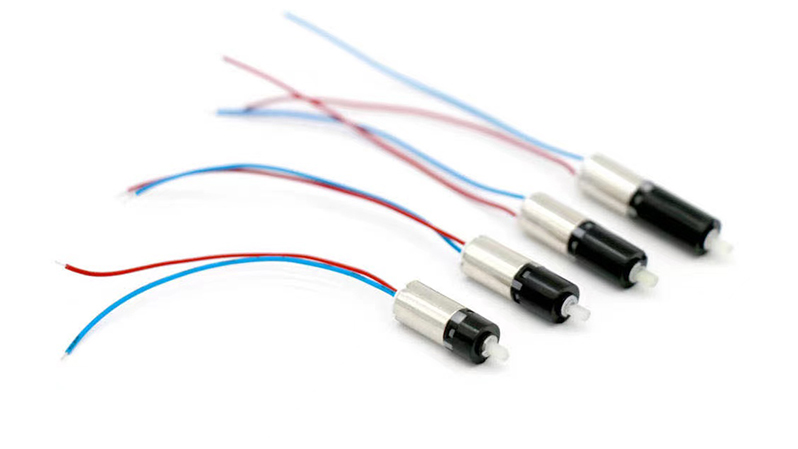
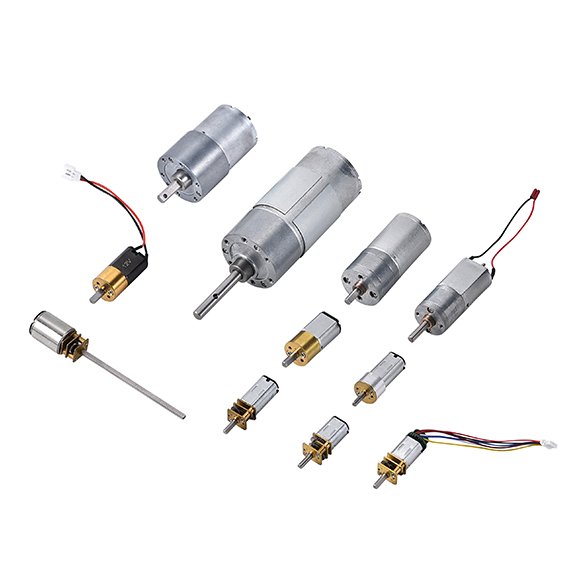
If you want the qualification package and the application-engineering conversation that goes with it, request the qualification package or talk to an application engineer. Bring the controlled specification and the duty cycle; the useful part of the conversation is the thermal and load margin, not the catalogue page. It also helps to know which product family you’re qualifying — our micro DC motor range spans brushed and brushless types from 6mm to 42mm, and the 6mm planetary gear motor is a good reference for how small an envelope a fully inspected motor can fit.
micro DC motor selection trade-offs for OEMs
Frequently Asked Questions
Which edition of the sampling standard should the inspection plan cite?
Name ISO 2859-1:2026, Edition 3, in the plan itself. Published on 22 January 2026, it cancels and replaces the 1999 edition together with its Amendment 1:2011 and Corrigendum 1:2001, and it introduces skip-lot sampling procedures (ISO committee record, 22 January 2026). Plenty of inspection providers still work from ANSI/ASQ Z1.4-2008 tables, so ask which edition the provider’s tables follow and put that edition number in the inspection plan. Skip-lot sampling is worth raising once your supplier has a stable quality history behind it.
Can I accept the supplier’s MTBF figure instead of running a life test?
No. A single MTBF number cannot stand in for a life test, because FAULHABER’s DC motor technical manual states that measured lifetime depends on torque load, speed, operating mode, ambient conditions and system integration, and that guaranteed lifetime figures cannot be given (undated). The supplier’s figure was measured on a duty cycle that is not yours. Test the motor at your own load profile and brush technology, and treat any published hour range as a planning input rather than an acceptance value.
What if the pilot capability study comes back between 1.33 and 1.67?
That band does not fail automatically, but it does not pass on the supplier’s word either. the PPAP initial-study capability bands require customer agreement plus enhanced controls in that range, which in practice means tighter reaction rules in the control plan, more frequent sampling, or added containment until the index improves (5 July 2026). Below 1.33 you are looking at containment and corrective action with interim approval only. Note also that Cpk versus Ppk for PPAP sets no single unconditional numeric requirement, so your customer-specific requirements govern the disposition (12 April 2026).
Do the Chinese GB/T motor standards apply automatically?
No. GB/T standards are voluntary unless a regulation, contract or certification rule pulls them in, so they bind your supplier only when you write them into the specification or the purchase order (STC Group, 2 April 2026). If you want GB/T test methods applied, name the standard and its edition in the controlled specification and require the test report to cite that edition back to you.
How long should a motor supplier qualification take?
There’s no published benchmark, so plan by gate rather than by calendar. The audit and first-article stages usually fit into two site visits, the pilot runs as long as your life test needs, and the launch gate closes when the documentation is complete. The real variable is how fast the supplier closes findings. A supplier that responds within a day to a corrective action moves much faster than one that needs a week per round, which is why we commit to answering technical inquiries within 8 hours at INEED Motors.
What should I include in the supplier questionnaire before the audit?
Keep it short and factual. Ask for the certificate register with scope and expiry, the last three lots’ in-line test data, the change-notification procedure with one worked example, and the raw-material sourcing route for magnets, bearings and lead wires. Add two questions that save trouble later: which sampling edition the supplier’s inspection tables follow, and whether any part number contains Chinese-origin rare earths above the permit threshold. If the supplier can’t answer the last one, that’s your first finding, not your last.
Do I need a full pilot for a standard catalogue motor?
Not always — but you do need the first-article and incoming-inspection gates regardless. If you’re buying an unmodified catalogue part, the audit and first-article steps still apply, while the pilot can scale down to a short run at your duty cycle plus a thermal check with your actual controller. Our N20 vs N30 gear motor spec guide shows how much a frame size change moves the inspection limits, which is often the reason a “standard” part stops being standard once it hits your board.
Conclusion
The four gates are a sequence, not a menu, and each closes with one artifact: a controlled specification, a process audit report, a first-article inspection record, and a signed pilot exit sheet. Skip one and the cost lands on your production line instead of in the qualification file. What you hold at the end is a qualification file that survives an audit and a lot that passes incoming inspection — which is the whole point of evaluating a Chinese micro DC motor manufacturer this way.
The evidence base for the method is narrower than it looks, and knowing where it stops is part of evaluating well. No source assigns an AQL value to micro motors as a product class, so your defect-class definitions carry the weight. No source quantifies how much of the micro motor market the rare-earth export controls affect, so the exposure stays a documented risk. No manufacturer or association publishes typical lead times or MOQ ranges, so those become contractual terms rather than benchmarks. Where the evidence is thin, the qualification file should say so rather than fill the gap with a supplier’s assurance.
Build the file, run the gates in order, and sign each one with the person who owns the consequence. A supplier qualified that way is one you can keep for the life of the programme.